Qingyuan moksha Biotechnology Co., Ltd


The surfactant system is the single most important decision in a facial cleanser project. It decides how the product foams, how it feels when rinsed, how much it costs, and whether customers with sensitive skin can use it more than once a day. Brands often brief a manufacturer with the phrase “make it gentle”, which is not a specification. What you actually need to specify is a surfactant class, a target pH and a foam profile. Here is how the options compare.
The three main surfactant families
Amino acid surfactants such as glutamates and glycinates are the mildest mainstream option. They produce a fine, dense foam rather than abundant large bubbles, feel less stripping after rinsing, and tolerate a pH close to skin. The trade-offs are cost and formulation difficulty: some systems thicken reluctantly, and salt-based viscosity adjustment behaves differently than with sulfates.
Amphoteric surfactants such as betaines are rarely used alone. They are excellent co-surfactants, softening the irritation profile of a primary surfactant and improving foam quality. Most well-built gentle cleansers are an amino acid and amphoteric blend rather than a single surfactant.
Sulfates such as SLES remain the most cost-effective route to abundant foam and reliable thickening. They are not inherently unsafe, but they are more stripping, which makes them a poor fit for products positioned for dry or sensitive skin. The problem is not the chemistry, it is the mismatch between the system and the position you want to sell on.
Formats change the brief
Gel cleansers, cream cleansers, foaming pumps and clay-based washes each constrain the surfactant choice differently. A foaming pump needs low viscosity liquid and a surfactant blend that foams without mechanical working. A cream cleanser needs an emulsified base and tolerates a milder surfactant because the mechanical action matters less. A cleansing balm is not a surfactant-led product at all and should be evaluated on emulsification speed instead.
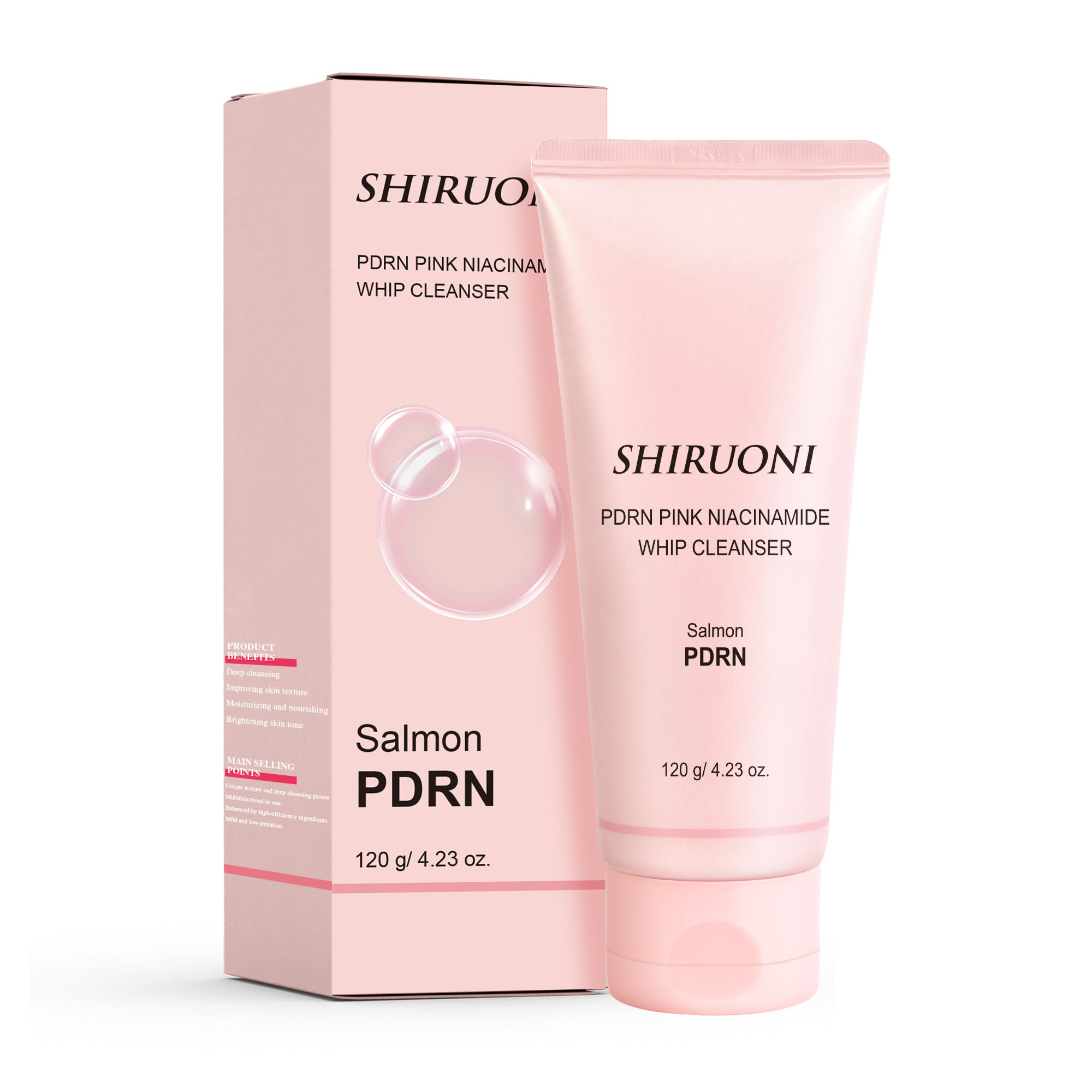
Our PDRN niacinamide facial cleanser is an example of an amino-acid-led system built for a hydrating position rather than a deep-clean position.
How to brief a manufacturer properly
A brief that produces a usable sample on the first attempt contains five items: the skin type you are targeting, the format, the desired after-rinse feel, the price ceiling for bulk, and the claim you intend to make. Everything else is a detail the formulator can decide.
The after-rinse feel is the most under-specified item in most briefs. Does the customer want a squeaky-clean finish or a soft, slightly conditioned finish? Those two answers lead to completely different surfactant blends.
What to test on the sample
When the sample arrives, go beyond smell and colour:
- Foam volume and bubble size, measured the same way for every sample you compare
- Rinsing time, as a proxy for residue
- Skin feel at five and thirty minutes after rinsing, when tightness usually appears
- Viscosity stability after two weeks at room temperature and at elevated temperature
- Compatibility with the intended pump or tube, since a formula that will not dispense is unusable
Keep the comparison blind if possible, and score against a fixed sheet, because sensory memory is unreliable across a long session.
Preservation and packaging
Water-based, frequently used, often stored in a wet bathroom: cleansers are a demanding environment for preservation. Ask for preservative efficacy data and confirm the packaging is compatible with the formula and closes properly. A tube with a poor seal will fail microbiologically no matter how good the preservative system is.
Our production workshop fills cleansers across gel, cream and foam formats, and the product range shows how different systems are positioned.
Positioning and price
At the mass-market end, a sulfate-led system keeps the unit cost low and still delivers an acceptable experience. At the premium end, an amino acid system supports a higher price and a gentler story. Decide which end you are building for before sampling, because changing later invalidates the work.
Send your brief through the inquiry form to get a formulation direction and cost band.
To summarise: a cleanser is defined by its surfactant system. Name the system, name the pH, name the after-rinse feel, and the rest of the project becomes straightforward.
Frequently asked questions
Can you produce Facial Cleanser OEM under our own brand?
Facial Cleanser OEM is handled as a private label project: you bring the brand and the market position, we cover formula, bulk, filling and packing. Existing bases can be adjusted for texture, fragrance and active level, or we develop from a new brief. Tooling and artwork belong to you, and our name does not appear on the pack.
What is the minimum order quantity?
MOQ is set by net fill per unit, not by category:
| Net fill | MOQ |
|---|---|
| < 15 ml/g | 5,000 pcs |
| 15-50 ml/g (50 included) | 3,000 pcs |
| 50-200 ml/g (200 included) | 2,000 pcs |
| > 200 ml/g | 1,000 pcs |
Several SKUs in one project can share a production run to reach the threshold, and a smaller trial order is possible once the formula is approved.
How long do samples and bulk production take?
Samples take 7-10 working days from a confirmed brief, or 10-15 days when a new mould or artwork is involved. Bulk runs 25-35 days after sample approval and packaging arrival. Repeat orders with an unchanged formula usually move faster.
Which certificates and documents come with the shipment?
The plant runs under GMPC and ISO 22716 with a 100,000-class cleanroom. Each shipment can include COA, MSDS, the full INCI list, stability data and microbiological reports. For the EU we support CPSR and PIF paperwork; for other markets we prepare the file set your importer asks for.
Can we change the formula, fragrance or packaging?
Yes. Texture, viscosity, fragrance, colour and active percentage are adjustable within regulatory limits. Packaging can be sourced by you or by us: tubes, airless bottles, jars, sachets and aluminium foil bags, with silkscreen, hot stamping or label application.
What information do you need to quote?
Category and target function, quantity per SKU, packaging direction, destination market and launch date. With that we reply within 24 hours on business days with feasibility, MOQ and a price range. An NDA can be signed before formulas are discussed.
Need this produced? Talk to the factory.
Wangsha Bio has run OEM/ODM production since 2006: 60,000 sqm plant, 17 lines, 100,000-class cleanroom, GMPC and ISO 22716 certified. Send your brief and we reply within 24 hours on business days with feasibility, MOQ and a price range.
Email lucky@moksha-bio.com | Product range | Workshop