Qingyuan moksha Biotechnology Co., Ltd


Body mists and hair mists have become a standard entry point for fragrance-adjacent brands because they are cheap to sample, easy to ship and simple to explain. They are also deceptively technical. The whole product is delivered as a fine dispersion, so the system has to stay clear, stay stable and smell the same at the first spray and the last. A mist is judged in two seconds, and both the deposition and the dry-down are visible immediately.
What Separates a Mist from a Spray
The difference is droplet size and intent. A fine mist is designed for coverage over a wide area with a low wet feel, while a spray is usually targeted and heavier. Droplet size is governed by the pump, the nozzle geometry and the viscosity of the liquid, so the formulation and the pack must be developed together.
Because the delivered dose per spray is small, the perceived strength depends heavily on alcohol or solubiliser content. Change the pump without re-tuning the base and the product will smell weaker or sharper than the approved sample.
Alcohol and Non-Alcohol Systems
Alcohol-based mists are the simplest and the fastest drying. They give a clean feel, hold fragrance well and are easy to preserve. The trade-offs are a cooling sensation on application, potential dryness on sensitive skin, and a strict eye on transport and storage classifications. Denatured alcohol grades differ in odour and should be evaluated, not assumed interchangeable.
Non-alcohol mists rely on solubilisers to hold fragrance in a clear aqueous base. They feel gentler and suit facial-adjacent or sensitive-skin positioning, but the solubiliser load needed to keep the fragrance clear can push the formula towards a sticky feel, and clarity can drift over time or in cold storage. Clarity at week zero proves very little; clarity after a cold cycle is the real test.
Fragrance Loading and Stability
Loading is set by target intensity, cost and stability rather than by preference. Fragrances are complex mixtures and individual components can discolour, oxidise or react with the base, so the study should track colour, odour and clarity at several checkpoints. Light exposure matters as well because translucent bottles with clear glass or PET expose the whole volume.
Where a higher perfume load is requested to improve longevity, the formulator can adjust the volatility profile instead of simply raising the level. Choosing a fragrance with a stronger base note often delivers more perceived longevity than adding more of the same concentrate.
Packaging and Pump Selection
Pack format drives both perception and performance. Clear bottles show clarity and invite colour matching; frosted or opaque formats hide discolouration and simplify stability work. Atomiser pumps should be tested for output per stroke, spray pattern, and behaviour when the bottle is nearly empty.
Hair mists bring an extra requirement: the liquid should not leave a heavy residue or weigh down the hair. Hair mist bases are closer to a light conditioning system than to a diluted fragrance, and the conditioning agent must be chosen for compatibility with the fragrance.
Claims and Testing
Mist claims should describe fragrance character, feel and wear rather than any effect on the body. Matching the claim to the fragrance brief keeps the marketing and the formula in agreement, which matters when a claim is reviewed later. Write the claim the fragrance house can also stand behind.
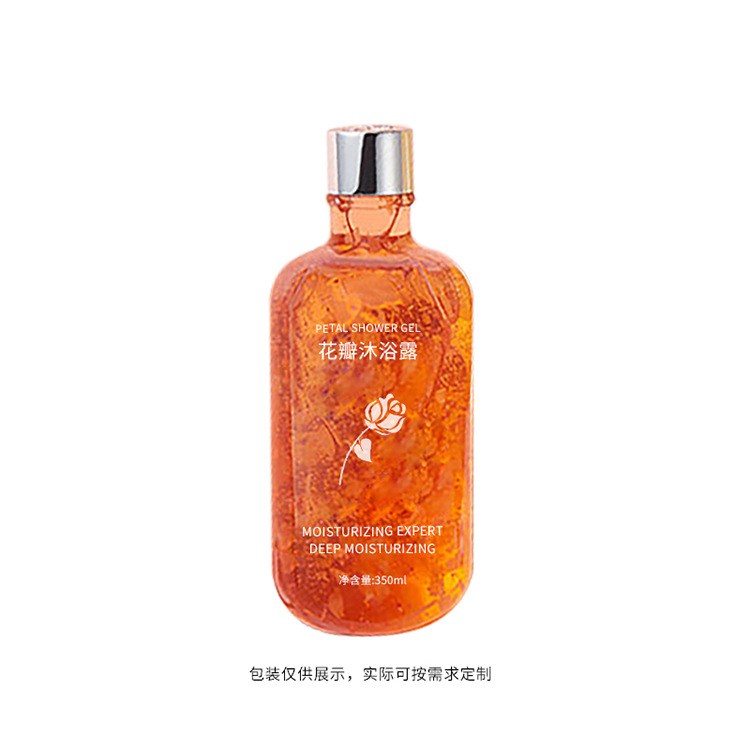
Testing should cover clarity after storage, colour drift, pump function over the fill life, and compatibility with the selected pack and any label decoration. A fragrance reference format is available on the scented shower gel page, the wider range sits on the product range page, and market notes appear under news. Sample scoping starts from the inquiry page.
Mists look simple and are not. Pin the pump, fix the alcohol or solubiliser route, load the fragrance to a tested level, and prove clarity through a cold cycle. Four decisions, each cheap at sampling stage and expensive after filling.
Frequently asked questions
Can you produce Body Mist and Hair Mist in Private Label under our own brand?
Body Mist and Hair Mist in Private Label is handled as a private label project: you bring the brand and the market position, we cover formula, bulk, filling and packing. Existing bases can be adjusted for texture, fragrance and active level, or we develop from a new brief. Tooling and artwork belong to you, and our name does not appear on the pack.
What is the minimum order quantity?
MOQ is set by net fill per unit, not by category:
| Net fill | MOQ |
|---|---|
| < 15 ml/g | 5,000 pcs |
| 15-50 ml/g (50 included) | 3,000 pcs |
| 50-200 ml/g (200 included) | 2,000 pcs |
| > 200 ml/g | 1,000 pcs |
Several SKUs in one project can share a production run to reach the threshold, and a smaller trial order is possible once the formula is approved.
How long do samples and bulk production take?
Samples take 7-10 working days from a confirmed brief, or 10-15 days when a new mould or artwork is involved. Bulk runs 25-35 days after sample approval and packaging arrival. Repeat orders with an unchanged formula usually move faster.
Which certificates and documents come with the shipment?
The plant runs under GMPC and ISO 22716 with a 100,000-class cleanroom. Each shipment can include COA, MSDS, the full INCI list, stability data and microbiological reports. For the EU we support CPSR and PIF paperwork; for other markets we prepare the file set your importer asks for.
Can we change the formula, fragrance or packaging?
Yes. Texture, viscosity, fragrance, colour and active percentage are adjustable within regulatory limits. Packaging can be sourced by you or by us: tubes, airless bottles, jars, sachets and aluminium foil bags, with silkscreen, hot stamping or label application.
What information do you need to quote?
Category and target function, quantity per SKU, packaging direction, destination market and launch date. With that we reply within 24 hours on business days with feasibility, MOQ and a price range. An NDA can be signed before formulas are discussed.
Need this produced? Talk to the factory.
Wangsha Bio has run OEM/ODM production since 2006: 60,000 sqm plant, 17 lines, 100,000-class cleanroom, GMPC and ISO 22716 certified. Send your brief and we reply within 24 hours on business days with feasibility, MOQ and a price range.
Email lucky@moksha-bio.com | Product range | Workshop