Qingyuan moksha Biotechnology Co., Ltd


For years, scalp care lived inside the shampoo bottle. A brand would add an anti-dandruff active or a botanical blend, print a line about the scalp on the front panel, and call the category done. That model is changing. Consumers now ask for products they can leave on the scalp, and the fastest growing shelf space belongs to serums, tonics and leave-in fluids that sit on the head for hours rather than thirty seconds under the shower. For a brand owner, the format is attractive: it carries a higher price, it supports a routine story, and it does not compete with the two-for-one logic of family shampoo. It is also harder to make than it looks.
Why scalp care moved out of the shower
A rinse-off product has a short contact time. Whatever the active does, it does within a minute or two before the water takes it away. A leave-in product changes that equation in both directions: the active has far more time to work, and the base has far more time to make the scalp uncomfortable. Residue, tackiness and visible flaking after application are the usual reasons a scalp serum fails at review stage.
The category also carries a different consumer expectation. Shampoo buyers compare foam and scent. Scalp serum buyers compare how the product feels on day three, whether their roots look greasy by the afternoon, and whether the bottle is pleasant to use. Texture and applicator design matter as much as the active system in this format.
Actives that survive a watery base
Most scalp serums are water-based, because alcohol-heavy tonics are increasingly rejected by consumers. That choice limits the active list. Oil-soluble actives need solubilisers or a small oil phase, and heat-sensitive actives need a cold process or a post-addition step.
Workable options include niacinamide for sebum balance, panthenol and allantoin for comfort, zinc PCA for oil control, caffeine for a light stimulating story, and peptide or botanical blends for a premium position. Salicylic acid can be used at low levels for exfoliation, though the pH window then constrains the rest of the formula.
Every active must be checked for solubility, pH tolerance and heat stability before it enters the brief. A beautiful concept list that cannot survive the process is a waste of sampling budget. Request an assay on the finished bulk, not only on the raw material.
Texture: hydrating without the grease
The base is where most scalp serums are won or lost. Glycerin at high levels gives immediate hydration but leaves a tacky film that shows in the hair. Light silicones improve slip but can build up. Polymeric thickeners give body but may flake when the product dries.
A practical approach is a low-viscosity aqueous gel built on a small amount of gellan or cellulose gum, with a light emollient at low percentage and a volatile carrier to speed drying. The target is a fluid that spreads through the roots, disappears in under a minute, and leaves no visible sheen.
Test the dried-down residue on dark hair and on light hair, because the same film reads very differently against those two backgrounds. Ask panellists to assess on day two rather than immediately after application.
Preservation, packaging and applicators
A watery, near-neutral product applied to skin with a dropper is a demanding preservation case. Challenge testing should cover the full formula, including any botanical that carries its own microbial load. Packaging must protect the product from light and from air ingress between uses.
Applicators shape the experience more than most brands expect. A dropper gives precision but can be slow on long hair, a twist applicator reaches the parting quickly, and a spray works for thin hair but wets the roots unevenly. Match the applicator to the hair type rather than to the packaging trend.
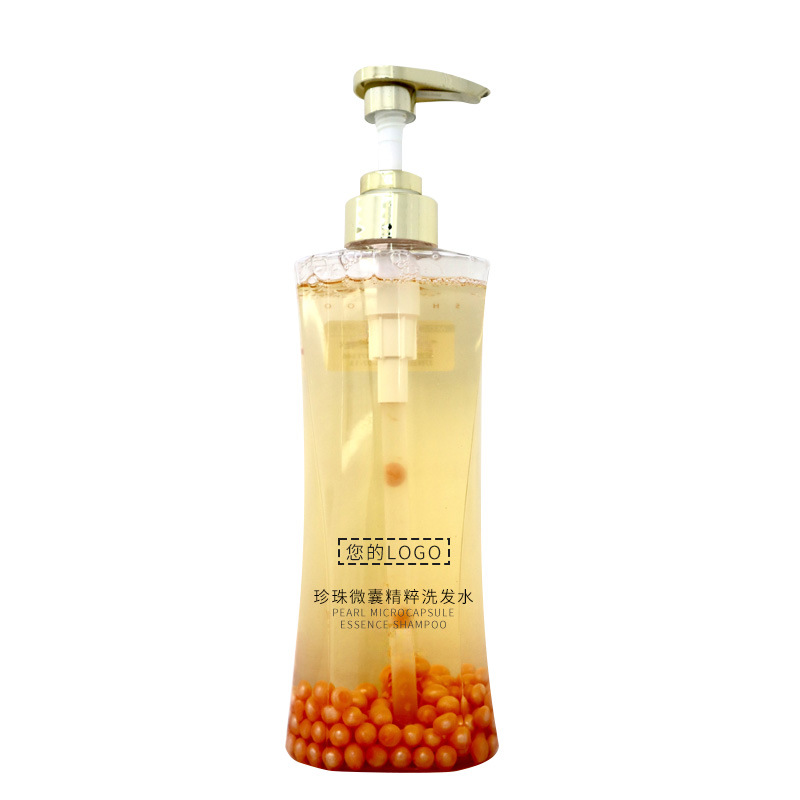
Our microcapsule hair care range shows how a delivery system can be carried into a hair product without destabilising the base, and the workshop overview covers filling options for small-dose formats.
Claims and documentation
Scalp claims sit close to a regulatory line. Reducing visible flakes, balancing oil and soothing discomfort are cosmetic territory. Anything that reads as a medical condition, a therapeutic claim moves the product into drug territory in several markets.
Keep claim language tied to appearance and sensation, and hold substantiation for anything stronger. Efficacy testing on a scalp serum usually means instrumental measurement of sebum or moisture plus a consumer study over two to four weeks. Decide the claim list before the formula is locked, so the test protocol matches what the label will say.
Documentation should cover the full ingredient declaration, allergen status of the fragrance, preservative system, stability data in the final pack and a batch record. For brands planning to export, the responsible person arrangement needs to be settled early. More formats are listed under our product range, and our company profile summarises the quality systems behind them. Project briefs can be sent through the inquiry form.
A scalp serum succeeds when the base disappears and the benefit stays. Build the texture first, then layer the story on top.
Frequently asked questions
Can you produce Scalp Serum and Leave-In Scalp Care OEM under our own brand?
Scalp Serum and Leave-In Scalp Care OEM is handled as a private label project: you bring the brand and the market position, we cover formula, bulk, filling and packing. Existing bases can be adjusted for texture, fragrance and active level, or we develop from a new brief. Tooling and artwork belong to you, and our name does not appear on the pack.
What is the minimum order quantity?
MOQ is set by net fill per unit, not by category:
| Net fill | MOQ |
|---|---|
| < 15 ml/g | 5,000 pcs |
| 15-50 ml/g (50 included) | 3,000 pcs |
| 50-200 ml/g (200 included) | 2,000 pcs |
| > 200 ml/g | 1,000 pcs |
Several SKUs in one project can share a production run to reach the threshold, and a smaller trial order is possible once the formula is approved.
How long do samples and bulk production take?
Samples take 7-10 working days from a confirmed brief, or 10-15 days when a new mould or artwork is involved. Bulk runs 25-35 days after sample approval and packaging arrival. Repeat orders with an unchanged formula usually move faster.
Which certificates and documents come with the shipment?
The plant runs under GMPC and ISO 22716 with a 100,000-class cleanroom. Each shipment can include COA, MSDS, the full INCI list, stability data and microbiological reports. For the EU we support CPSR and PIF paperwork; for other markets we prepare the file set your importer asks for.
Can we change the formula, fragrance or packaging?
Yes. Texture, viscosity, fragrance, colour and active percentage are adjustable within regulatory limits. Packaging can be sourced by you or by us: tubes, airless bottles, jars, sachets and aluminium foil bags, with silkscreen, hot stamping or label application.
What information do you need to quote?
Category and target function, quantity per SKU, packaging direction, destination market and launch date. With that we reply within 24 hours on business days with feasibility, MOQ and a price range. An NDA can be signed before formulas are discussed.
Need this produced? Talk to the factory.
Wangsha Bio has run OEM/ODM production since 2006: 60,000 sqm plant, 17 lines, 100,000-class cleanroom, GMPC and ISO 22716 certified. Send your brief and we reply within 24 hours on business days with feasibility, MOQ and a price range.
Email lucky@moksha-bio.com | Product range | Workshop