
 Qingyuan moksha Biotechnology Co., Ltd


Many private label hair ranges are assembled from two separate projects: a shampoo sourced for cleansing performance and a conditioner sourced for richness. Each product passes its own brief, yet the pair behaves poorly in the shower. The shampoo strips too much, the conditioner cannot deposit enough, and the customer reports flat or greasy hair after a week.
Treating the two as one formulation exercise removes most of that risk. The logic below is the sequence our team uses when a brand owner asks for a matching pair rather than two stand-alone stock formulas.
1. Fix the surfactant system first
Cleansing intensity sets the ceiling for what the conditioner has to repair. A sulfate-based primary surfactant delivers strong foam and fast rinse, but it also lifts more lipid from the fibre, so the conditioner needs a higher cationic load to restore smoothness. Amino acid or isethionate systems are gentler and leave more natural lipid behind, which allows a lighter conditioner.
Choosing the conditioner before the shampoo is backwards; the shampoo decides how much repair is needed. Decide the positioning, then size the conditioning load against it.
2. Cationic conditioning and deposition
Conditioners rely on cationic surfactants and polymers that adsorb onto negatively charged hair surfaces. Deposition depends on charge density, molecular weight, dilution during rinse and contact time. Too little and the hair feels rough; too much and it feels coated and loses volume.
Polyquaternium types differ sharply in how they build up over repeated washes. Build-up is the usual cause of complaints that appear in week three rather than on day one, so a repeat-cycle test matters more than a single-application panel.
3. Viscosity, salt curve and pumpability
Shampoo viscosity is usually tuned with electrolyte. The salt curve is narrow: a small addition thickens quickly, and past the peak the system thins again. Conditioners thicken through fatty alcohols and cationic surfactants, and their viscosity is far more sensitive to process temperature and cooling rate.
If the range will use a pump or a large orifice cap, target a viscosity that still flows at low temperature. A formula that only works at 25°C will fail in an unheated warehouse.
4. Pairing by charge, pH and overlap
Anionic shampoo residue and cationic conditioner actives neutralise each other. Rinsing thoroughly reduces the effect, but the pH gap between the two products also matters. Keeping both in a compatible window avoids the dull, tacky feel that comes from complexes forming on the fibre.
Where a two-in-one is planned, the conditioning agent must be selected for compatibility with the surfactant micelles. A genuine two-in-one is a different formulation, not a shampoo with conditioner added.
5. Testing the pair before launch
Run both products on the same panel, in the same wash cycle, and measure wet combing force, dry friction, foam volume after oily load and shine. Repeat for at least ten cycles to expose build-up. Check stability at elevated temperature for both packs, and confirm that the fragrance does not shift in the conditioner base.
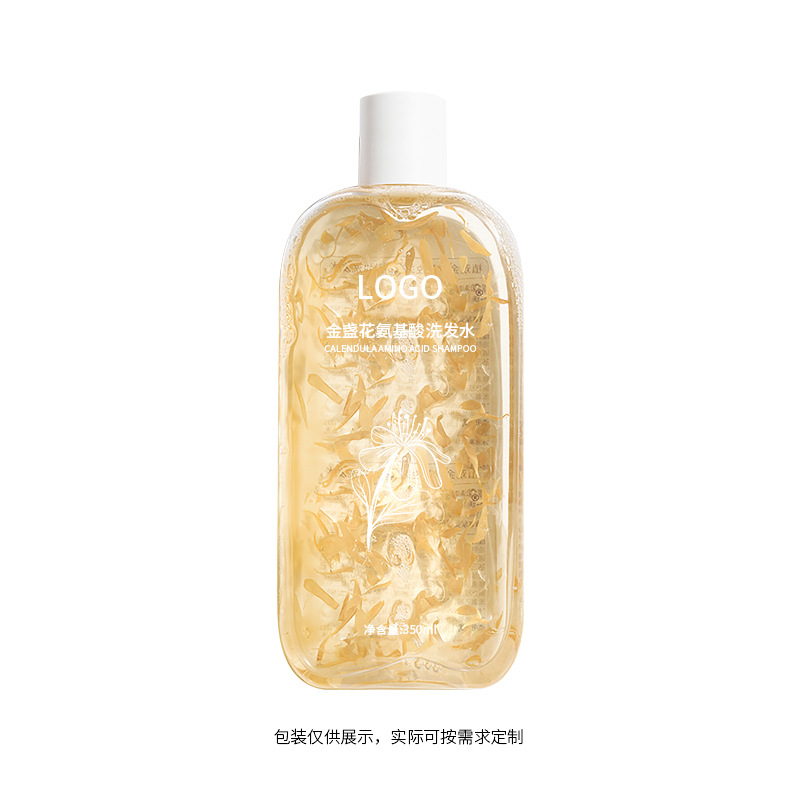
Our amino acid shampoo range is developed with the matching conditioner base in the same project, which shortens the trial cycle. Production runs are handled in the workshop with in-process viscosity checks, and documentation is prepared for each batch.
That is why a paired brief should state the wash frequency the range is designed for. A daily-use pair for fine hair behaves very differently from a twice-weekly pair for coarse, colour-treated hair, and the cationic load should follow the frequency rather than the hair type alone.
For markets where hard water is common, add a water hardness variant to the panel. Calcium and magnesium ions interact with anionic surfactants and shift both foam and deposition, so a pair that feels rich in soft water can feel flat and slightly squeaky in hard water.
Finally, agree the fragrance level across both products. A strong shampoo scent and a subtle conditioner scent read as two different brands in the shower even when the artwork matches.
A pair that is designed together reads as one brand on the shelf and in use. Buyers who brief both products at once usually save a full sampling round. Browse the product range for base options, review the company profile for capacity and certification, or contact the team with your target positioning to start a paired sample request.
Frequently asked questions
Can you produce Shampoo and Conditioner Pairing under our own brand?
Shampoo and Conditioner Pairing is handled as a private label project: you bring the brand and the market position, we cover formula, bulk, filling and packing. Existing bases can be adjusted for texture, fragrance and active level, or we develop from a new brief. Tooling and artwork belong to you, and our name does not appear on the pack.
What is the minimum order quantity?
MOQ is set by net fill per unit, not by category:
| Net fill | MOQ |
|---|---|
| < 15 ml/g | 5,000 pcs |
| 15-50 ml/g (50 included) | 3,000 pcs |
| 50-200 ml/g (200 included) | 2,000 pcs |
| > 200 ml/g | 1,000 pcs |
Several SKUs in one project can share a production run to reach the threshold, and a smaller trial order is possible once the formula is approved.
How long do samples and bulk production take?
Samples take 7-10 working days from a confirmed brief, or 10-15 days when a new mould or artwork is involved. Bulk runs 25-35 days after sample approval and packaging arrival. Repeat orders with an unchanged formula usually move faster.
Which certificates and documents come with the shipment?
The plant runs under GMPC and ISO 22716 with a 100,000-class cleanroom. Each shipment can include COA, MSDS, the full INCI list, stability data and microbiological reports. For the EU we support CPSR and PIF paperwork; for other markets we prepare the file set your importer asks for.
Can we change the formula, fragrance or packaging?
Yes. Texture, viscosity, fragrance, colour and active percentage are adjustable within regulatory limits. Packaging can be sourced by you or by us: tubes, airless bottles, jars, sachets and aluminium foil bags, with silkscreen, hot stamping or label application.
What information do you need to quote?
Category and target function, quantity per SKU, packaging direction, destination market and launch date. With that we reply within 24 hours on business days with feasibility, MOQ and a price range. An NDA can be signed before formulas are discussed.
Need this produced? Talk to the factory.
Wangsha Bio has run OEM/ODM production since 2006: 60,000 sqm plant, 17 lines, 100,000-class cleanroom, GMPC and ISO 22716 certified. Send your brief and we reply within 24 hours on business days with feasibility, MOQ and a price range.
Email lucky@moksha-bio.com | Product range | Workshop