Qingyuan moksha Biotechnology Co., Ltd


Anti-pollution has become one of the most quoted phrases in urban skincare, and also one of the most loosely used. The consumer picture is clear: city air, particulates and ozone, and a product that somehow shields the skin. The formulation and regulatory picture is less clear, which is exactly where brands get into trouble. An anti-pollution product succeeds when the claim, the formula layers and the test data line up; it fails audits when any one of the three is missing.
1. What pollution means for skin, precisely
In cosmetic terms, pollution covers three distinct exposures: particulate matter such as PM2.5 adhering to the skin and hair, oxidative stress driven by ozone and polycyclic aromatic hydrocarbons, and incidental contact with heavy metals. Each exposure has a different response layer. Anti-pollution is a composite concept built from cleansing, shielding and antioxidant layers, and no single layer carries the whole story.
This composite nature is actually an advantage for line planning rather than a burden. A cleanser owns the cleansing layer, a leave-on product owns shielding and antioxidants, and the narrative divides cleanly across the range. Assigning the pollution concept as a division of labour across products reads better than stacking every function into one serum.
2. What the formula can genuinely do
The antioxidant layer draws on vitamin C derivatives, vitamin E, astaxanthin, ergothioneine and plant polyphenols. The shielding layer uses film-forming polymers and silica-type powders that reduce direct contact between particles and skin. The cleansing layer is ordinary surfactant design, upgraded with evidence that particle residue is actually removed. In-vitro antioxidant capacity, measured by methods such as DPPH or ORAC, is the most accessible piece of data supporting the antioxidant layer.
A stronger tier of evidence is an adhesion and removal test: particles applied to a skin model or tape strip, washed with the product, and quantified against a control. The method is simple, but it must be documented with a protocol. The persuasive power of an anti-pollution claim comes from reproducible controlled comparisons, not from a list of antioxidant names.
3. Blue light: the neighbouring claim, handled with care
Blue light is often bundled into the same urban narrative. The honest framing is that tinted products containing iron oxides genuinely attenuate visible light, while colourless products rely on antioxidants to address the oxidative pathways light can trigger. A tinted base can talk about reducing blue light contact; a colourless product needs its own test data before it uses the same language.
If the brief includes a blue-light claim, the supporting work is either a cell-model study under irradiation or a human assessment of erythema and pigmentation change, both of which are slow and cost real money. Blue-light claims carry a higher evidence threshold than anti-pollution claims, and the budget for that evidence should be agreed before the pack is printed.
4. Wording that survives scrutiny
Compliant anti-pollution wording describes mechanisms softly: "helps reduce the adhesion of pollutants", "antioxidant care against environmental stress". The wording to avoid is medical or absolute: detoxifying, repairing pollution damage, preventing cell damage. Weak verbs and specific paths make claims durable; strong verbs make them indefensible.
Behind every sentence on the detail page there should be an archived method and result: what was measured, on what model, with how many replicates, with what outcome. Regulators in several markets are moving towards claim-substantiation audits, and concept products are examined with extra curiosity. Every claim sentence should map to one filed document, and that mapping should be built before launch, not during an audit.
5. Where the concept lands in a product range
The natural carriers are antioxidant serums and tinted or powder-containing bases, because those formats align with the shielding and antioxidant layers. Sheet masks suit a situational "after a day in the city" narrative, and cleansers carry the removal story. A focused range of one or two concept anchor products is more credible than a whole line wearing the badge. Launch the concept as one or two anchor products, then let the rest of the line reference it, rather than printing the word across every SKU.
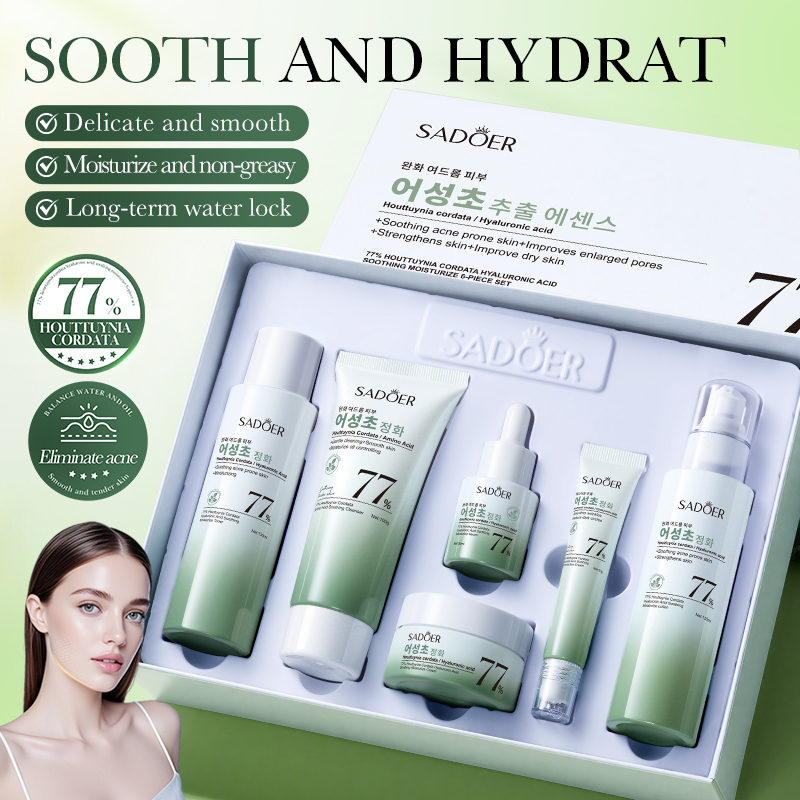
Reference formats include the houttuynia toner and the salmon PDRN serum in the current range. Line capability is described on the workshop page, the full range sits under our product range, and concept briefs can be sent through contact.
Frequently asked questions
Can you produce Anti-Pollution Claims in Private Label Skincare under our own brand?
Anti-Pollution Claims in Private Label Skincare is handled as a private label project: you bring the brand and the market position, we cover formula, bulk, filling and packing. Existing bases can be adjusted for texture, fragrance and active level, or we develop from a new brief. Tooling and artwork belong to you, and our name does not appear on the pack.
What is the minimum order quantity?
MOQ is set by net fill per unit: under 15 ml/g 5,000 pcs; 15-50 ml/g 3,000 pcs; 50-200 ml/g 2,000 pcs; above 200 ml/g 1,000 pcs. Several SKUs in one project can share a production run to reach the threshold.
How long do samples and bulk production take?
Samples take 7-10 working days from a confirmed brief, or 10-15 days when a new mould or artwork is involved. Bulk runs 25-35 days after sample approval and packaging arrival. Repeat orders with an unchanged formula usually move faster.
Which certificates and documents come with the shipment?
The plant runs under GMPC and ISO 22716 with a 100,000-class cleanroom. Each shipment can include COA, MSDS, the full INCI list, stability data and microbiological reports. For the EU we support CPSR and PIF paperwork; for other markets we prepare the file set your importer asks for.
Can we change the formula, fragrance or packaging?
Yes. Texture, viscosity, fragrance, colour and active percentage are adjustable within regulatory limits. Packaging can be sourced by you or by us: tubes, airless bottles, jars, sachets and aluminium foil bags, with silkscreen, hot stamping or label application.
What information do you need to quote?
Category and target function, quantity per SKU, packaging direction, destination market and launch date. With that we reply within 24 hours on business days with feasibility, MOQ and a price range. An NDA can be signed before formulas are discussed.
Need this produced? Talk to the factory.
Wangsha Bio has run OEM/ODM production since 2006: 60,000 sqm plant, 17 lines, 100,000-class cleanroom, GMPC and ISO 22716 certified. Send your brief and we reply within 24 hours on business days with feasibility, MOQ and a price range.
Email lucky@moksha-bio.com | Product range | Workshop