Qingyuan moksha Biotechnology Co., Ltd


Dupe development has grown quickly because it answers a real commercial question: can a brand deliver a comparable experience at a lower price point. Buyers often describe the brief as copying a formula, but the ingredient list only shows what is present, never the ratios, the process or the grade of each material. Matching a reference product is a problem of matching experience, not of reproducing a list. This guide sets out the five steps a development team should be able to document.
Step One: Turn the Reference Sample into Data
Before any formulation work, the reference has to be characterised: appearance, colour, odour, pH, viscosity, density and solids content. These values become the baseline against which every trial is judged. Without baseline numbers, "close enough" cannot be written into an acceptance criterion.
The second dataset is sensory. Record the amount used, the spread behaviour, the time to absorb, the residue at a fixed interval and the feel after rinsing. Three to five assessors scoring independently, with the median taken, is enough to make the comparison usable. Converting a subjective impression into a comparable score is what allows a project to progress at all.
Step Two: Identify the Skeleton
Appearance and rinse behaviour indicate whether the reference is an oil-in-water emulsion, a water-in-oil emulsion or an anhydrous system. Viscosity and stringiness suggest the thickening route; spread behaviour suggests the oil load. A skeleton that is identified incorrectly cannot be corrected later by adjusting dosage.
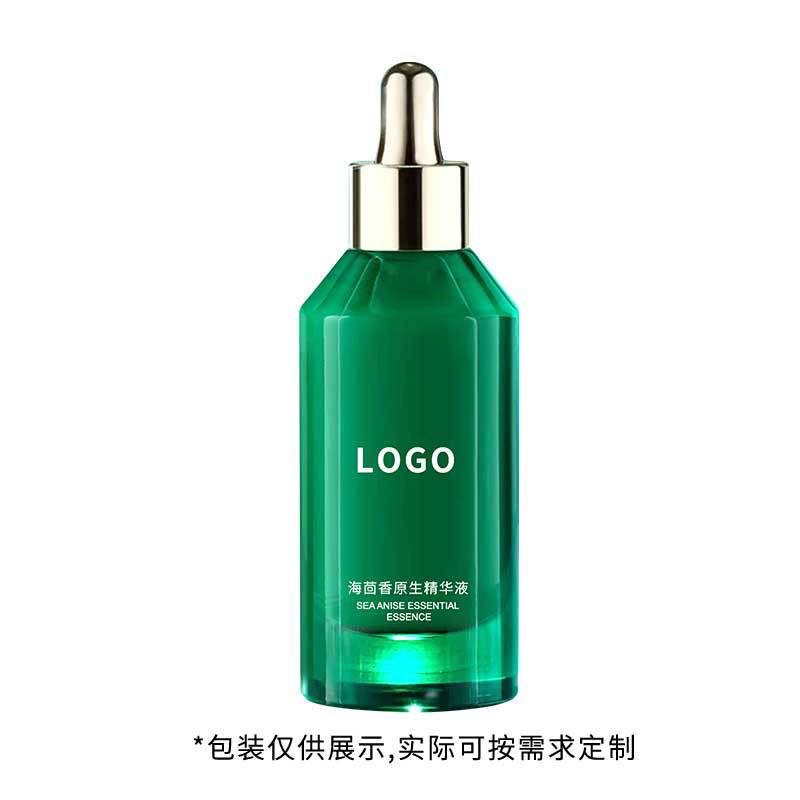
Existing formats usually give a sensible starting point. A water-based serum such as this firming essence follows a very different development path from a rich cream, even when the marketing positions are similar. Pick the right skeleton first and the detail work becomes short.
Step Three: Move One Variable at a Time
Matching rarely happens in one round. The reliable method separates the variables: fix the skeleton, then tune the oil phase; once the skeleton holds, tune the thickener and the flow behaviour; only then adjust actives and fragrance. Change one variable per trial, or the result tells you nothing about which change mattered.
Keep a version log
Every trial needs its formula, its process parameters and its assessment recorded. Without that, three rounds later nobody can say which version was closer. Version control looks like paperwork but it is the mechanism that makes a project converge.
Step Four: Replace What Cannot Be Copied
A reference product always contains something that cannot be reproduced: a proprietary raw material, a specific encapsulation route, a patented process. None of these need to be forced. A functionally similar alternative is normally the better commercial answer. The target is a comparable experience, not molecular identity.
Every substitution reopens stability and compatibility work. Swapping a material can shift preservation, colour and odour at the same time. Regard any substitution as a new formula and repeat the validation, particularly when fragrance or preservative chemistry changes.
Step Five: Keep Claims and Filings Separate
This step is skipped more often than any other. Marketing language for a dupe product drifts toward phrases such as same factory, same formula or identical to a named brand, and those phrases carry both advertising and trademark risk. A brand can describe similar texture and similar use experience, but must not imply any link to the original brand.
The ingredient declaration must reflect the formula actually produced, never the reference. Filing a list copied from another product while using a different formula is a declaration problem rather than a marketing one. Claims and formula have to agree; that is the compliance floor for this category. Manufacturer credentials and development routes are summarised on the about us page.
Dupe development is a product strategy, not a shortcut around development. Document the baseline, identify the skeleton, isolate the variables, replace honestly and keep the copy compliant, and the project can reach stable production. Concepts can be submitted through the contact page.
Frequently asked questions
Can you produce Benchmarking a Reference Sample under our own brand?
Benchmarking a Reference Sample is handled as a private label project: you bring the brand and the market position, we cover formula, bulk, filling and packing. Existing bases can be adjusted for texture, fragrance and active level, or we develop from a new brief. Tooling and artwork belong to you, and our name does not appear on the pack.
What is the minimum order quantity?
MOQ is set by net fill per unit: under 15 ml/g 5,000 pcs; 15-50 ml/g 3,000 pcs; 50-200 ml/g 2,000 pcs; above 200 ml/g 1,000 pcs. Several SKUs in one project can share a production run to reach the threshold.
How long do samples and bulk production take?
Samples take 7-10 working days from a confirmed brief, or 10-15 days when a new mould or artwork is involved. Bulk runs 25-35 days after sample approval and packaging arrival. Repeat orders with an unchanged formula usually move faster.
Which certificates and documents come with the shipment?
The plant runs under GMPC and ISO 22716 with a 100,000-class cleanroom. Each shipment can include COA, MSDS, the full INCI list, stability data and microbiological reports. For the EU we support CPSR and PIF paperwork; for other markets we prepare the file set your importer asks for.
Can we change the formula, fragrance or packaging?
Yes. Texture, viscosity, fragrance, colour and active percentage are adjustable within regulatory limits. Packaging can be sourced by you or by us: tubes, airless bottles, jars, sachets and aluminium foil bags, with silkscreen, hot stamping or label application.
What information do you need to quote?
Category and target function, quantity per SKU, packaging direction, destination market and launch date. With that we reply within 24 hours on business days with feasibility, MOQ and a price range. An NDA can be signed before formulas are discussed.
Need this produced? Talk to the factory.
Wangsha Bio has run OEM/ODM production since 2006: 60,000 sqm plant, 17 lines, 100,000-class cleanroom, GMPC and ISO 22716 certified. Send your brief and we reply within 24 hours on business days with feasibility, MOQ and a price range.
Email lucky@moksha-bio.com | Product range | Workshop