Qingyuan moksha Biotechnology Co., Ltd


Every private label buyer reaches the same fork at some point: keep using stock packaging or invest in custom moulds. There is no universal answer, because the right route depends on budget, launch timing and how much shelf differentiation the brand needs. Choosing the wrong packaging route costs time more than money, and launch windows rarely forgive a delay. This guide breaks the decision into three routes.
Route One: Stock Bottles with Decoration
Stock bottles come from moulds the packaging maker already owns. The brand picks a bottle, a colour, and commissions printing or coating. The advantage is speed and a low entry volume, with finished goods possible in a few weeks. With stock packaging, the value lives in colour and decoration, not in the bottle silhouette. A change of coating and silk-screen can transform how a familiar shape reads on the shelf.
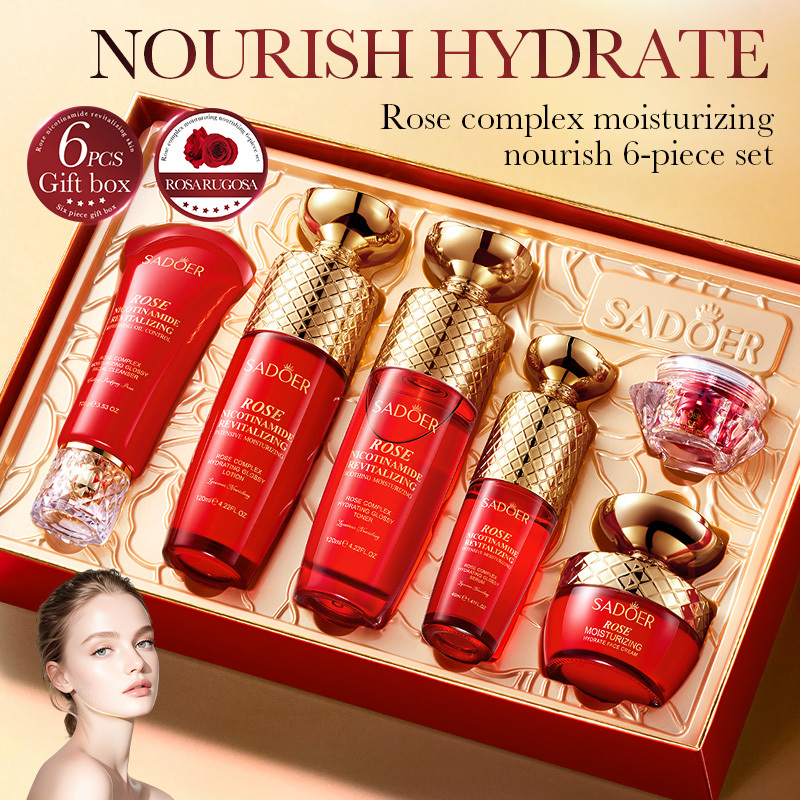
The risk is sameness: popular shapes appear under several brands, so recognition blurs. The practical answer is to push differentiation into labels, cartons and cap colours. Starting on stock while building memory through content and visual identity is a workable rhythm for most new brands. Set examples of coordinated ranges, such as the rose moisturising skincare set, show how far decoration carries a stock bottle.
Route Two: Semi-Custom on a Stock Skeleton
Semi-custom keeps the bottle as stock and designs the cap, pump or carton as exclusive. Cap tooling costs a step below bottle tooling, yet it lifts recognition sharply. Spending the differentiation budget on the parts consumers touch twice a day beats spending it on the bottle body. Pump actuation feel and cap closure damping are the touchpoints that read as quality.
The coordination point is the neck standard. A stock bottle has a fixed neck finish, and any cap or pump must match it; changing the standard means changing the bottle tool. Lock the neck standard before the bottle is ordered, and every accessory downstream stays out of rework. Confirm it in writing with the packaging maker during sampling.
Route Three: Full Custom Tooling
Custom tooling involves three bills: the mould fee, the sampling period and the rounds of trial-and-correction. A bottle mould moves from drawings through 3D modelling, mock-ups, machining and trial shots, and the whole path is counted in months. The part of the timeline that cannot be compressed is trial and correction, so planning for two correction rounds is the robust way to schedule.
Mould ownership and custody need contract language: who owns the tool once the fee is paid, the brand's right to call on it, and what happens if production stops. Terms missing from the mould contract become the disputes of next year. Intellectual property on the design should be settled in the same document; company background and cooperation terms are summarised on the about us page.
Speeding Up the Sampling Stage
Tooling lead time is long, but sampling can run in parallel. Confirm the silhouette and proportions with 3D-printed or CNC mock-ups while formula development proceeds; move to real mould shots for filling and drop tests once the tool is cut. Mock-ups settle the shape, moulds settle the process, and running the two lines in parallel saves weeks. Remember that wall thickness differs between a printed mock-up and the moulded part, so leave room for feel adjustments.
Decoration also needs physical samples: colours on a curved bottle shift from flat proofs. Confirm colour on a physical sample; the printed code is only the starting point. Filling and packaging coordination on the line is shown on the workshop page.
A Layered Way to Decide
The three routes are not exclusive. Mature brands layer them: volume lines ride stock, image lines take semi-custom caps, and flagship singles justify full tooling. Deciding by product tier puts the packaging budget where it earns. Minimums, tooling quotes and timelines are handled through the contact page, with an enquiry form on the Inquiry page and more notes in the news section.
Frequently asked questions
Can you produce Stock Bottles or Custom Moulds: Three Packaging Routes under our own brand?
Stock Bottles or Custom Moulds: Three Packaging Routes is handled as a private label project: you bring the brand and the market position, we cover formula, bulk, filling and packing. Existing bases can be adjusted for texture, fragrance and active level, or we develop from a new brief. Tooling and artwork belong to you, and our name does not appear on the pack.
What is the minimum order quantity?
MOQ is set by net fill per unit: under 15 ml/g 5,000 pcs; 15-50 ml/g 3,000 pcs; 50-200 ml/g 2,000 pcs; above 200 ml/g 1,000 pcs. Several SKUs in one project can share a production run to reach the threshold.
How long do samples and bulk production take?
Samples take 7-10 working days from a confirmed brief, or 10-15 days when a new mould or artwork is involved. Bulk runs 25-35 days after sample approval and packaging arrival. Repeat orders with an unchanged formula usually move faster.
Which certificates and documents come with the shipment?
The plant runs under GMPC and ISO 22716 with a 100,000-class cleanroom. Each shipment can include COA, MSDS, the full INCI list, stability data and microbiological reports. For the EU we support CPSR and PIF paperwork; for other markets we prepare the file set your importer asks for.
Can we change the formula, fragrance or packaging?
Yes. Texture, viscosity, fragrance, colour and active percentage are adjustable within regulatory limits. Packaging can be sourced by you or by us: tubes, airless bottles, jars, sachets and aluminium foil bags, with silkscreen, hot stamping or label application.
What information do you need to quote?
Category and target function, quantity per SKU, packaging direction, destination market and launch date. With that we reply within 24 hours on business days with feasibility, MOQ and a price range. An NDA can be signed before formulas are discussed.
Need this produced? Talk to the factory.
Wangsha Bio has run OEM/ODM production since 2006: 60,000 sqm plant, 17 lines, 100,000-class cleanroom, GMPC and ISO 22716 certified. Send your brief and we reply within 24 hours on business days with feasibility, MOQ and a price range.
Email lucky@moksha-bio.com | Product range | Workshop