Qingyuan moksha Biotechnology Co., Ltd


Among skincare formats, sheet masks carry one of the highest microbial risk profiles. The essence is fully water-based and nutrient-rich, the fabric itself is an excellent carrier for microorganisms, and although the sealed foil sachet eliminates post-opening exposure, every step before sealing must be controlled tightly. Preservation for sheet masks has to be planned across the essence formula, the fabric and the filling environment, and a strong formula alone cannot compensate for weak process hygiene.
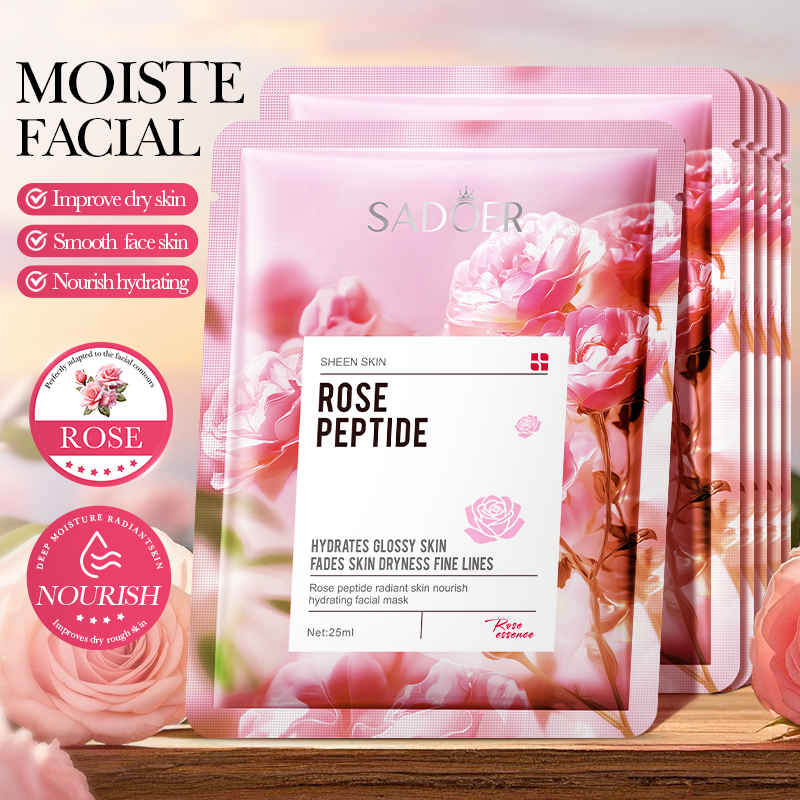
Why Masks Are Harder Than Creams
Creams hold water in a continuous phase that limits microbial access, so their preservation burden concentrates on consumer use. Mask essences live in an open aqueous system where polysaccharides, botanical extracts and proteins feed growth, and the soaked fabric multiplies the surface area where contamination can establish. The risk window sits between essence preparation and sealing, and preservative dosage cannot replace process control in that window.
A common misconception is that raising preservative levels solves everything. Regulatory limits and skin tolerability both cap the dosage, and overshooting invites stinging complaints on a product that sits on the face for twenty minutes. Preservation is a systems task: hygiene design, formula design and packaging support each other, with no single component carrying the load.
Fabric and Essence Interaction
The same essence can behave differently on different fabrics. Fabric material and incoming bioburden decide how much microbial load enters the sachet, so fabric lots must be received against microbial specifications and cleaned or sterilised before soaking. Write fabric handling and bioburden limits into the process file, because the fabric is part of the preservation system.
Fabrics also adsorb formula components selectively, and preservatives are among the molecules most affected. Polysaccharide-rich and protein-rich essences show measurable losses of free preservative once the sheet is loaded. Measure preservative depletion on the actual fabric during sampling and build that loss into the formulation margin. A gel-bead format that sidesteps part of this issue is the pearl repair mask on the product page, and classic soaked formats sit alongside it in the product section.
Low-Preservative and Preservative-Free Claims
The low-preservative route trims the preservative list to essentials and supports it with multifunctional agents such as pentylene glycol and phenethyl alcohol. This route works, but only when the challenge test passes on the finished mask format. Do not brief a low-preservative claim until the challenge report is in hand, because the claim must follow the evidence.
The preservative-free route removes conventional preservatives entirely and leans on humectant systems, packaging barriers and clean filling. It demands higher cleanroom discipline and tighter shelf-life management, and marketplace reviews of the wording keep tightening. Preservative-free is a supply-chain commitment, not a copywriting choice, so audit the process capability before committing. Cleaning and sanitising routines behind such claims are described in the news section.
Challenge Testing and Batch Release
Challenge testing inoculates the product with a mixed strain panel and tracks counts over several weeks to confirm the system suppresses growth. Samples must go in as finished masks, essence plus fabric plus sachet, not as bottled liquid of the same formula. Test the exact marketed format, otherwise the result does not cover the real product.
Batch release adds a microbial limits test on every lot, and settle-plate and air-sampling records from the filling room provide the parallel evidence stream. Batch micro records and room monitoring data together form the evidence chain buyers should ask to see during audits. Facility conditions are shown on the workshop page.
Practical Advice for Buyers
When briefing a mask project, regard the preservation tier as a decision equal in weight to the actives: choose conventional, low-preservative or preservative-free first, then let that choice drive process requirements and cost. Fixing the preservation tier before the formula is final saves an entire reformulation cycle. Sampling and testing arrangements run through the contact page, the RFQ form is on the Inquiry page, and company background is on the about us page.
Frequently asked questions
Can you produce Preservative Strategy for Sheet Masks under our own brand?
Preservative Strategy for Sheet Masks is handled as a private label project: you bring the brand and the market position, we cover formula, bulk, filling and packing. Existing bases can be adjusted for texture, fragrance and active level, or we develop from a new brief. Tooling and artwork belong to you, and our name does not appear on the pack.
What is the minimum order quantity?
MOQ is set by net fill per unit: under 15 ml/g 5,000 pcs; 15-50 ml/g 3,000 pcs; 50-200 ml/g 2,000 pcs; above 200 ml/g 1,000 pcs. Several SKUs in one project can share a production run to reach the threshold.
How long do samples and bulk production take?
Samples take 7-10 working days from a confirmed brief, or 10-15 days when a new mould or artwork is involved. Bulk runs 25-35 days after sample approval and packaging arrival. Repeat orders with an unchanged formula usually move faster.
Which certificates and documents come with the shipment?
The plant runs under GMPC and ISO 22716 with a 100,000-class cleanroom. Each shipment can include COA, MSDS, the full INCI list, stability data and microbiological reports. For the EU we support CPSR and PIF paperwork; for other markets we prepare the file set your importer asks for.
Can we change the formula, fragrance or packaging?
Yes. Texture, viscosity, fragrance, colour and active percentage are adjustable within regulatory limits. Packaging can be sourced by you or by us: tubes, airless bottles, jars, sachets and aluminium foil bags, with silkscreen, hot stamping or label application.
What information do you need to quote?
Category and target function, quantity per SKU, packaging direction, destination market and launch date. With that we reply within 24 hours on business days with feasibility, MOQ and a price range. An NDA can be signed before formulas are discussed.
Need this produced? Talk to the factory.
Wangsha Bio has run OEM/ODM production since 2006: 60,000 sqm plant, 17 lines, 100,000-class cleanroom, GMPC and ISO 22716 certified. Send your brief and we reply within 24 hours on business days with feasibility, MOQ and a price range.
Email lucky@moksha-bio.com | Product range | Workshop