Qingyuan moksha Biotechnology Co., Ltd


Facial oils have moved from niche to shelf fixture, and the reason is simple: they deliver a sensory result a consumer can feel within seconds. That immediacy is also the risk. An oil-based formula has almost no tolerance for a poor raw material choice, because there is no emulsion structure, no thickener network and very little water to absorb an error. A badly chosen carrier oil does not create a minor defect; it becomes the product. This guide covers carrier selection, texture tuning and stability for oil-based skincare.
Why Oil-Based Products Have Little Room for Error
An emulsion hides a great deal. Water carries the humectants, the oil phase carries the emollients, and the emulsifier system holds them apart, so a weak component can often be offset elsewhere. An anhydrous formula has no such mechanism. Every component in an oil does visible work, which is why reformulating one takes longer than reformulating a lotion.
That constraint cuts both ways. It makes development less forgiving, and it also makes differentiation easier to hold, because texture in this category is genuinely difficult to reconstruct from a label. Texture, not the ingredient list, is the part of an oil-based product that competitors cannot copy quickly.
Choosing the Carrier Oil System
Most commercial facial oils combine three roles: a light oil that carries spread, a heavier oil that provides occlusion and richness, and a functional or aromatic fraction that carries the positioning. The ratio of the first two decides whether users describe the product as fast-absorbing or as sitting on the skin, and that description predicts repeat purchase more reliably than any claim.
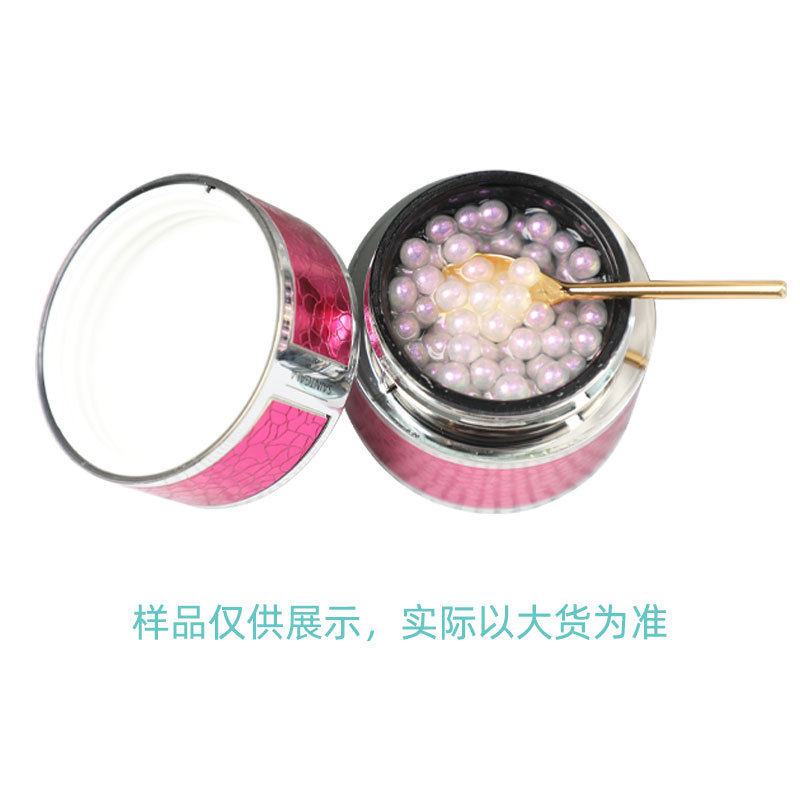
Oxidative stability varies widely between oils and is not correlated with how premium a raw material sounds. A highly unsaturated oil that reads well in marketing can shorten the usable shelf life of the whole blend if it dominates the formula. Screen oils for oxidative stability before screening them for story. Reference formats in the current range include this microencapsulated essence oil and this water-light activating oil.
Light and heavy are a ratio, not a category
Oil feel is often discussed in fixed categories, but the sensation comes from the blend rather than from any single ingredient. The same oil can read as light in one formula and heavy in another, which is why oils should be judged inside the intended blend at the intended ratio rather than neat on the back of a hand.
Tuning Texture: Spread and Residue
Two measurements matter most. Spread describes how easily the product glides, and residue describes what remains after absorption. Users rarely object to richness; they object to richness that never resolves. The goal is not an invisible product but one whose richness fades on a predictable timeline.
The efficient method is to build three or four blends across the light-to-heavy ratio and have one panel score them on the same day, recording glide and residue at a fixed interval, for example ten minutes after application. A fixed measurement point turns a sensory argument into a repeatable result. If reducing perceived oiliness is a priority, encapsulation is one route worth evaluating, because it changes the release step rather than the oil itself.
Oxidation Control and Stability Testing
Appearance is a weak indicator of oxidation. Odour drift and colour deepening usually appear after the chemistry has already moved, which makes a purely visual stability report misleading. Measure peroxide value and acid value at each stability checkpoint rather than relying on sight and smell alone.
Antioxidant protection should be designed at two levels: inside the formula, and through the pack. Light exposure is a significant driver for oils, so a stability programme should include a light-exposure condition in addition to the standard three temperatures. Pack barrier performance is part of the protection strategy for an oil, not a cosmetic afterthought.
Packaging and Application Design
Pack format follows viscosity. Dropper bottles suit mobile oils, pumps suit heavier bodies, and roller or cushion applicators suit targeted use. Mismatching the two produces the two most common complaints in this category: difficulty dispensing, or far too much product per press. Test the pack against the production viscosity, because a sample in a beaker is thinner than the final bulk.
Decide the usage model at the same time: used alone, mixed with a moisturiser, or layered at a fixed point in the routine. Clear usage instructions reduce returns more effectively than any claim about performance. Production and filling capability are described in the workshop overview, and the wider format is described in the product range.
Facial oil is a demanding category with unusually loyal repeat behaviour. Fix the carrier ratio, define the residue timeline, and protect the blend in the pack. A stable oil with a predictable feel outperforms a more exotic blend that changes character on the shelf. Send your concept through the inquiry form to scope a sampling plan.
Frequently asked questions
Can you produce Facial Oil and Oil-Based Serum OEM under our own brand?
Facial Oil and Oil-Based Serum OEM is handled as a private label project: you bring the brand and the market position, we cover formula, bulk, filling and packing. Existing bases can be adjusted for texture, fragrance and active level, or we develop from a new brief. Tooling and artwork belong to you, and our name does not appear on the pack.
What is the minimum order quantity?
MOQ is set by net fill per unit, not by category:
| Net fill | MOQ |
|---|---|
| < 15 ml/g | 5,000 pcs |
| 15-50 ml/g (50 included) | 3,000 pcs |
| 50-200 ml/g (200 included) | 2,000 pcs |
| > 200 ml/g | 1,000 pcs |
Several SKUs in one project can share a production run to reach the threshold, and a smaller trial order is possible once the formula is approved.
How long do samples and bulk production take?
Samples take 7-10 working days from a confirmed brief, or 10-15 days when a new mould or artwork is involved. Bulk runs 25-35 days after sample approval and packaging arrival. Repeat orders with an unchanged formula usually move faster.
Which certificates and documents come with the shipment?
The plant runs under GMPC and ISO 22716 with a 100,000-class cleanroom. Each shipment can include COA, MSDS, the full INCI list, stability data and microbiological reports. For the EU we support CPSR and PIF paperwork; for other markets we prepare the file set your importer asks for.
Can we change the formula, fragrance or packaging?
Yes. Texture, viscosity, fragrance, colour and active percentage are adjustable within regulatory limits. Packaging can be sourced by you or by us: tubes, airless bottles, jars, sachets and aluminium foil bags, with silkscreen, hot stamping or label application.
What information do you need to quote?
Category and target function, quantity per SKU, packaging direction, destination market and launch date. With that we reply within 24 hours on business days with feasibility, MOQ and a price range. An NDA can be signed before formulas are discussed.
Need this produced? Talk to the factory.
Wangsha Bio has run OEM/ODM production since 2006: 60,000 sqm plant, 17 lines, 100,000-class cleanroom, GMPC and ISO 22716 certified. Send your brief and we reply within 24 hours on business days with feasibility, MOQ and a price range.
Email lucky@moksha-bio.com | Product range | Workshop