Qingyuan moksha Biotechnology Co., Ltd


Shampoos get the attention in hair care, but the products consumers judge most harshly are the ones that stay on the hair afterwards. Conditioners and hair masks are evaluated on how hair feels when it dries, which happens hours after the shower and cannot be corrected by fragrance or lather. A conditioner lives or dies on deposition, and deposition is a formulation variable rather than an ingredient badge. This article covers what brand owners should settle before sampling a rinse-off conditioning line.
The Difference Between a Conditioner and a Mask
The two formats are related but not interchangeable. A conditioner is used after every wash, so it has to deposit lightly and rinse cleanly without building up over repeated use. A mask is used weekly, so it can carry a heavier load and a richer texture, and users tolerate a longer dwell time. Building a weekly mask on a daily-use conditioner formula produces the limp, weighed-down result that sends users back to their previous brand.
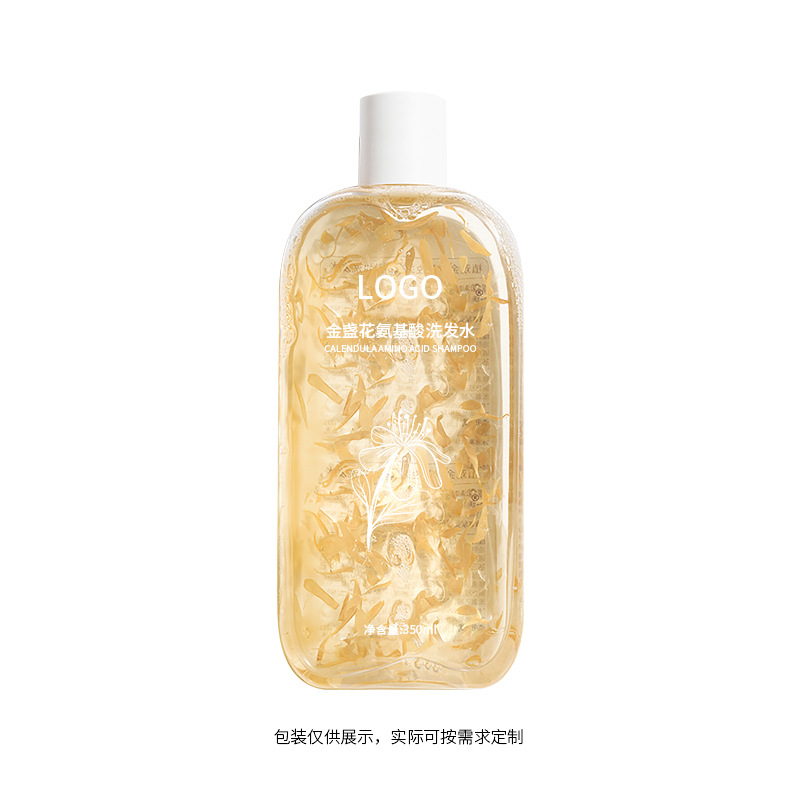
The distinction also drives cost structure. Masks absorb a higher raw material cost per unit because usage frequency is lower. Match the formulation depth to the use frequency before optimising the price. Reference formats in the current range include this amino acid hair care line, with a treatment-oriented option in this colour care variant.
Cationic Systems and Deposition
Cationic surfactants and polymers carry a positive charge that binds to the negatively charged surface of damaged hair, and that is the mechanism behind detangling and softness. The practical difficulty is that deposition has to be enough to be felt and limited enough to avoid build-up. Too little deposition reads as stripping, while too much reads as coated.
Deposition is measured, not assumed
The proportion of a conditioning agent that actually stays on the fibre varies with molecular weight, charge density, dilution and dwell time. A higher percentage in the formula does not automatically mean more on the hair. Request deposition data for the specific system rather than assuming that a higher use level performs better. This is one of the few places where a formula change can be validated numerically before any consumer test.
Rinse-Off Performance and Water Hardness
Rinse-off products are affected by the water they are used with, and water hardness varies enormously between markets. Calcium and magnesium ions interact with surfactants and can reduce both lather and deposition. A formula that performs well in soft water can under-deliver noticeably in a hard-water city.
The practical approach is to test in the hardness of the target market, either locally or in a laboratory setup calibrated to that value. Water hardness belongs in the test specification, not in the assumptions. Colour-treated hair adds a further constraint, since some conditioning systems accelerate colour loss; if the line targets coloured hair, that interaction has to be checked before the claim is written.
Testing That Predicts Consumer Perception
Standard physico-chemical testing shows the product is stable, not that it will be liked. Two additional measurements close most of that gap. Wet combing force quantifies detangling after rinsing and correlates closely with the language reviewers use. Wet combing force is the most useful single proxy for perceived conditioning. Dry combing and static behaviour matter for the mask format, where the result appears only after drying.
These measurements are also useful when a formula is reformulated for cost, because they show whether a cheaper system changed the outcome. Test the reformulation with the same method as the original, or the comparison means nothing. Manufacturer capabilities are summarised on the about us page.
Claims, Documentation and Format Decisions
Hair care claims are the most likely in a portfolio to drift into medical language, particularly around the scalp. Wording should be reviewed against the destination market well before artwork is printed. Write the claim set while the formula is still open, so the supporting work is scheduled with the project rather than after it.
Format decisions interact with the claim. A larger pack with a thicker texture reads as an intensive treatment, while a smaller pack with a lighter texture reads as a daily product. Pack size is a positioning decision that the formula has to support. The wider range is listed in the product range, and specifications can be submitted through the contact page.
Conditioning formats reward discipline more than novelty. Set deposition against use frequency, verify performance in the target market's water, and keep claims inside what the data supports. A conditioner that detangles without build-up keeps its rating long after a more dramatic launch has faded.
Frequently asked questions
Can you produce Conditioner and Hair Mask OEM under our own brand?
Conditioner and Hair Mask OEM is handled as a private label project: you bring the brand and the market position, we cover formula, bulk, filling and packing. Existing bases can be adjusted for texture, fragrance and active level, or we develop from a new brief. Tooling and artwork belong to you, and our name does not appear on the pack.
What is the minimum order quantity?
MOQ is set by net fill per unit, not by category:
| Net fill | MOQ |
|---|---|
| < 15 ml/g | 5,000 pcs |
| 15-50 ml/g (50 included) | 3,000 pcs |
| 50-200 ml/g (200 included) | 2,000 pcs |
| > 200 ml/g | 1,000 pcs |
Several SKUs in one project can share a production run to reach the threshold, and a smaller trial order is possible once the formula is approved.
How long do samples and bulk production take?
Samples take 7-10 working days from a confirmed brief, or 10-15 days when a new mould or artwork is involved. Bulk runs 25-35 days after sample approval and packaging arrival. Repeat orders with an unchanged formula usually move faster.
Which certificates and documents come with the shipment?
The plant runs under GMPC and ISO 22716 with a 100,000-class cleanroom. Each shipment can include COA, MSDS, the full INCI list, stability data and microbiological reports. For the EU we support CPSR and PIF paperwork; for other markets we prepare the file set your importer asks for.
Can we change the formula, fragrance or packaging?
Yes. Texture, viscosity, fragrance, colour and active percentage are adjustable within regulatory limits. Packaging can be sourced by you or by us: tubes, airless bottles, jars, sachets and aluminium foil bags, with silkscreen, hot stamping or label application.
What information do you need to quote?
Category and target function, quantity per SKU, packaging direction, destination market and launch date. With that we reply within 24 hours on business days with feasibility, MOQ and a price range. An NDA can be signed before formulas are discussed.
Need this produced? Talk to the factory.
Wangsha Bio has run OEM/ODM production since 2006: 60,000 sqm plant, 17 lines, 100,000-class cleanroom, GMPC and ISO 22716 certified. Send your brief and we reply within 24 hours on business days with feasibility, MOQ and a price range.
Email lucky@moksha-bio.com | Product range | Workshop