Qingyuan moksha Biotechnology Co., Ltd


Sensitive skin is one of the fastest-growing positionings in mass skincare and one of the easiest to get wrong. A barrier cream is judged mostly by what it does not do: it should not sting on application, should not separate in the jar, and should not feel heavier after a week of use than it did on day one. A barrier product fails on tolerance rather than on ingredient count. This guide covers what to settle with a manufacturer before the first sample, and which specification items brand owners most often leave out.
What Barrier Repair Actually Requires
The skin barrier is a lipid structure, and a formula intended to support it has to supply the right materials in the right proportions. Ceramides receive nearly all the attention, but they work as part of a ratio with cholesterol and fatty acids rather than on their own. A ceramide percentage on a label tells a buyer almost nothing about whether the ratio supports the barrier.
The second requirement is restraint. Every additional active raises the chance of a reaction in a population that already reports reactivity, and each one adds a compatibility question to answer. A short, well-tolerated formula outsells a crowded one in this category, because the customer who reacts once rarely gives the brand a second chance. Reference formats are listed in the product range, and one existing direction is this calming and restoring skincare product.
Lipid Ratio and Ingredient Restraint
Most barrier-oriented creams combine a physiological lipid set with a conventional emollient and occlusive base. The physiological portion supplies the materials the barrier is built from; the conventional portion controls how the product feels and how long it stays on the skin. Getting the physiological set right matters more than raising its percentage, because an unbalanced ratio can feel heavier without adding benefit.
Ingredient restraint applies to preservatives as well as actives. Some of the more common preservation options carry a higher reported irritation potential at the doses needed in a water-rich emulsion, which creates a genuine tension between protection and tolerance. Resolve the preservative question early, because it constrains the pH range and the pack format at the same time.
Fragrance and essential oils
Fragrance is the most frequent single cause of reported irritation in leave-on products, and a product positioned for reactive skin is usually better served by a fragrance-free route. If scent is commercially necessary, keep the load low and disclose it clearly. For this positioning, transparency about what is absent is often a stronger selling point than what is present.
Texture: Richness Without Weight
Consumers on reactive skin often describe two opposite complaints: the product is too light to feel protective, or it is so rich that it never settles. The target is a cream that reads as substantial at application and disappears within a few minutes. The measurable goal is not maximum richness but a predictable fade time.
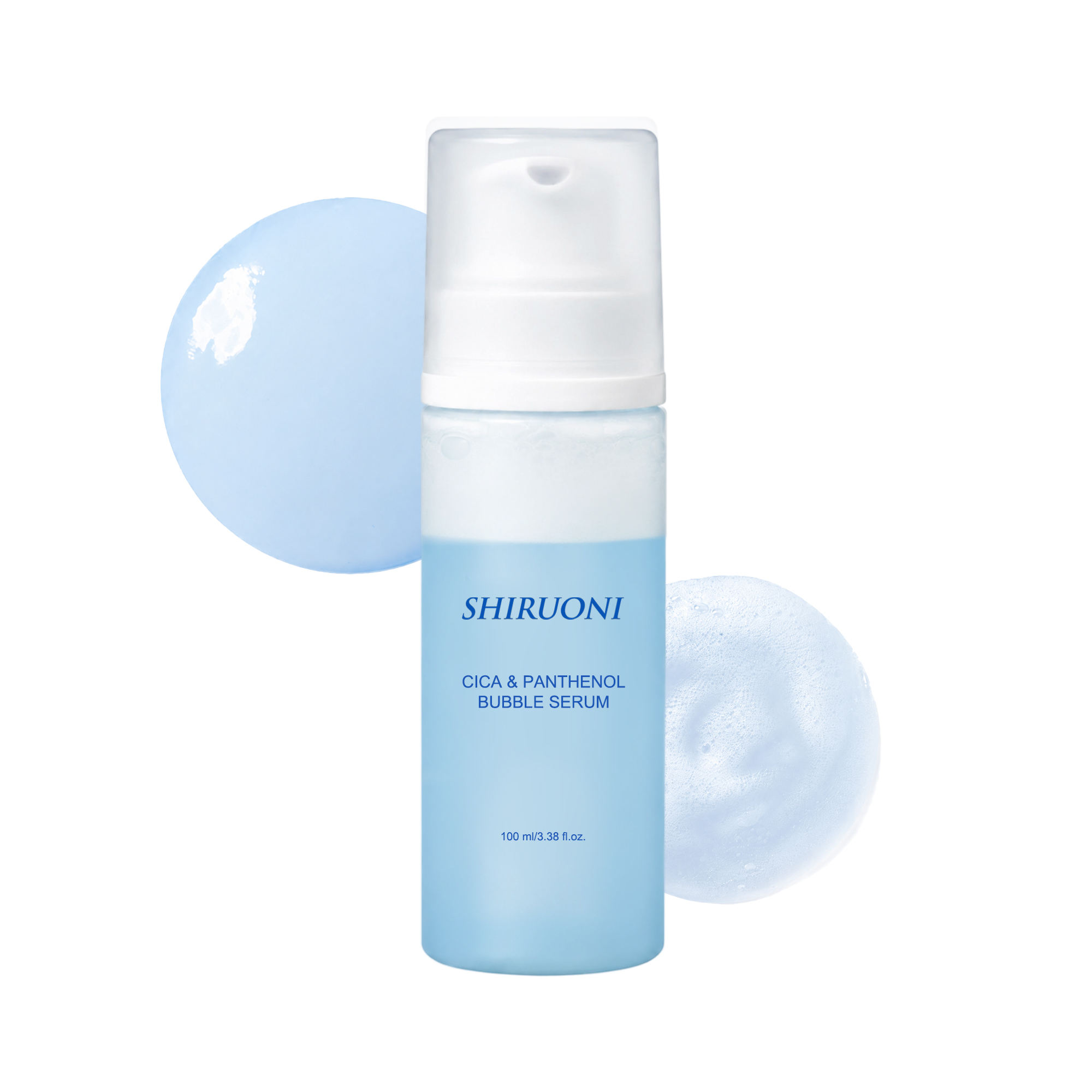
Several levers control this. The oil phase's spread behaviour, the choice of thickening system, and the amount of high molecular weight humectant all shift the perceived weight. Testing should compare three or four variants on the same panel in the same session, with residue scored at a fixed interval such as ten minutes. A fixed measurement point turns a subjective argument into a repeatable result. A soothing serum format used alongside the cream is shown in this centella-based reference.
Preservation and Stability Testing
Water-rich emulsions carry high microbiological risk, and a sensitive-skin positioning narrows the available preservation options at the same time as it raises the cost of failure. The practical answer is to reduce dependence on the preservative system through pack design, so that a sealed pump replaces an open jar wherever positioning allows. The same formula can pass in a pump and fail in a jar, and only the finished pack counts.
Stability work should run on the finished pack across three temperature conditions, plus a freeze-thaw cycle if the product ships internationally. Colour drift is the usual failure mode when botanical inputs are present. Define the acceptable colour and odour range in advance, because judging them once the batch exists invites argument. Production and cleanroom conditions are described in the workshop overview.
Claims and Specification Items Buyers Forget
Claims for reactive skin sit closest to the medical line in the entire portfolio. Wording that implies a physiological effect should be removed in favour of language describing appearance and user experience. Write the claim set while the formula is still open, so the supporting work is scheduled with the project instead of after it.
Four items belong in the written specification: the challenge test method and acceptance criteria, the pH range with an allowable tolerance, the pack format assessed, and a change-notification requirement covering the preservative system and its supplier. A change-notification clause is the least expensive protection a brand owner can write into a supply agreement. Manufacturer documentation is summarised on the about us page, and requirements can be submitted through the contact page.
Barrier repair rewards discipline rather than novelty. Match the lipid set to a defensible ratio, keep the ingredient list short, verify tolerance in the final pack, and hold the claims inside what the data supports. A cream that never stings keeps its rating long after a more dramatic launch has been forgotten.
Frequently asked questions
Can you produce Barrier Repair Cream OEM for Sensitive Skin under our own brand?
Barrier Repair Cream OEM for Sensitive Skin is handled as a private label project: you bring the brand and the market position, we cover formula, bulk, filling and packing. Existing bases can be adjusted for texture, fragrance and active level, or we develop from a new brief. Tooling and artwork belong to you, and our name does not appear on the pack.
What is the minimum order quantity?
MOQ is set by net fill per unit, not by category:
| Net fill | MOQ |
|---|---|
| < 15 ml/g | 5,000 pcs |
| 15-50 ml/g (50 included) | 3,000 pcs |
| 50-200 ml/g (200 included) | 2,000 pcs |
| > 200 ml/g | 1,000 pcs |
Several SKUs in one project can share a production run to reach the threshold, and a smaller trial order is possible once the formula is approved.
How long do samples and bulk production take?
Samples take 7-10 working days from a confirmed brief, or 10-15 days when a new mould or artwork is involved. Bulk runs 25-35 days after sample approval and packaging arrival. Repeat orders with an unchanged formula usually move faster.
Which certificates and documents come with the shipment?
The plant runs under GMPC and ISO 22716 with a 100,000-class cleanroom. Each shipment can include COA, MSDS, the full INCI list, stability data and microbiological reports. For the EU we support CPSR and PIF paperwork; for other markets we prepare the file set your importer asks for.
Can we change the formula, fragrance or packaging?
Yes. Texture, viscosity, fragrance, colour and active percentage are adjustable within regulatory limits. Packaging can be sourced by you or by us: tubes, airless bottles, jars, sachets and aluminium foil bags, with silkscreen, hot stamping or label application.
What information do you need to quote?
Category and target function, quantity per SKU, packaging direction, destination market and launch date. With that we reply within 24 hours on business days with feasibility, MOQ and a price range. An NDA can be signed before formulas are discussed.
Need this produced? Talk to the factory.
Wangsha Bio has run OEM/ODM production since 2006: 60,000 sqm plant, 17 lines, 100,000-class cleanroom, GMPC and ISO 22716 certified. Send your brief and we reply within 24 hours on business days with feasibility, MOQ and a price range.
Email lucky@moksha-bio.com | Product range | Workshop