Qingyuan moksha Biotechnology Co., Ltd


Fragrance is the single most powerful differentiator in personal care and the hardest one to specify on paper. A body wash that smells outstanding in the beaker can turn harsh on the skin, fade before the shower ends, or shift character after three months on a humid shelf. Fragrance performance has to be designed into the base, not added on top of it. This guide covers scent architecture, longevity in wash-off formats, and the stability questions worth settling before a brief is placed.
Why Fragrance Behaves Differently in a Wash-Off Base
A shower product is diluted within seconds and rinsed away immediately. Much of the fragrance leaves with the water, so the version perceived in the bottle is not the version the user experiences. What survives on skin after rinsing is the only fragrance performance that drives repurchase.
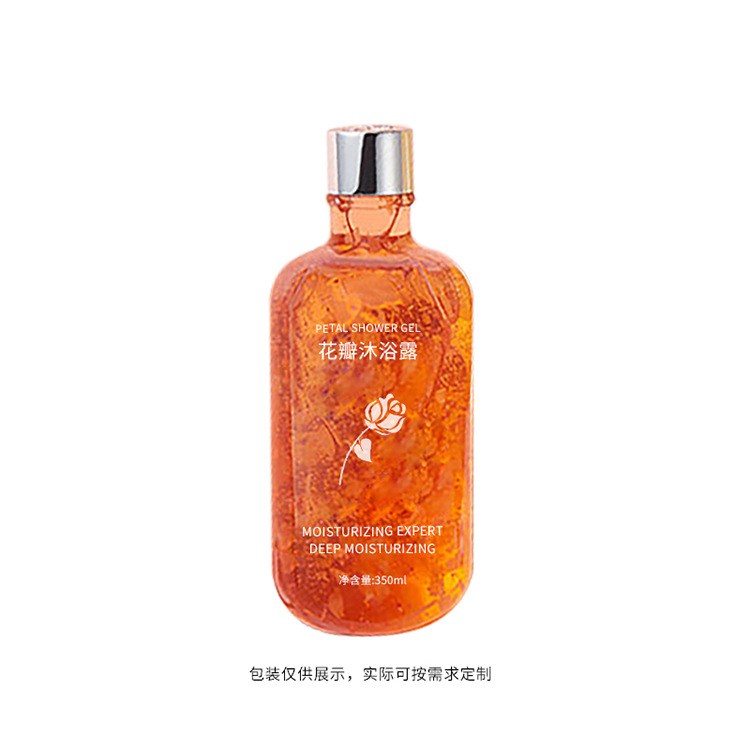
Surfactant systems also interact with fragrance materials. Some components are solubilised more readily than others, which changes the balance of the accord once the product is diluted. Evaluate the scent in the diluted, rinsed context rather than from the neat base. Existing formats in the current range include this multi-flavour shower gel.
Building Scent Architecture
Fragrance is normally described in three stages: top notes that register immediately, heart notes that carry the character, and base notes that persist. In a rinse-off product the top notes have little working time, so the heart and base carry most of the commercially relevant impression. Weight the accord toward the heart and base when the product is rinsed away within a minute.
The same accord behaves differently across formats. A body lotion stays on skin and keeps its top notes audible for longer, while a shampoo has to survive both dilution and a rinse. Design one accord family and then re-tune it for each format rather than reusing a single formula. A related amino acid base is shown in this mousse shower gel reference.
Signature and range coherence
Brands build recognition by repeating a recognisable accord across a line, so that using a shower gel and then a body lotion produces a layered impression rather than two competing ones. A shared accord family across a range is more memorable than a different scent in every stock keeping unit.
Longevity and the Fixation Question
Longevity on skin is influenced by both the fragrance composition and the base. Heavier molecules with lower volatility stay longer, which is why base-heavy accords are the practical route to a scent that is still detectable an hour after a shower. Choosing longer-lasting materials is more reliable than simply adding more fragrance.
Adding more fragrance raises cost, increases the chance of irritation reporting, and can destabilise the base. Encapsulation offers an alternative by changing when the material is released rather than how much is present. Encapsulation trades a higher unit cost for a release profile that longer-lasting materials alone cannot reproduce. Manufacturer capability for these routes is described in the workshop overview.
Base Compatibility and Stability Testing
Fragrance interacts with surfactant systems, preservatives and pH, and the interaction is not always visible at the point of manufacture. Documented failure modes include viscosity loss in a thickened base, colour change, and a shift in odour character over the first weeks of storage. A fragrance that passes at day one and fails at week six is a stability problem, not a fragrance problem.
Stability work should include three temperature conditions plus a light-exposure condition, and it should assess both the physical base and the perceived odour. Assess odour at every checkpoint, because a scent that has changed is a defect the consumer notices before anything else.
Documentation and disclosure
Fragrance components are subject to allergen declaration requirements in several markets, and the documentation has to come from the fragrance house rather than from the finished-goods manufacturer. Confirm documentation scope before artwork is signed off, because allergen disclosure affects the ingredient list layout.
Sourcing and Briefing a Fragrance House
An effective brief describes the target audience, the channel, the format, the region and the intended emotional register, and it names products that are close but not identical. Naming reference products shortens the process more than any adjective list, because it gives the perfumer a direction to move from.
Cost should be quoted per unit at the finished-goods level rather than per kilogram of fragrance oil, since dosage varies by format. Compare fragrance cost against finished-unit cost, or the comparison across formats will mislead. The wider range is listed in the product range, and manufacturer credentials appear on the about us page.
Fragrance is the fastest way to make a commodity format feel proprietary, and the fastest way to lose a customer if it misbehaves on skin or on the shelf. Design it in the diluted context, test it to the end of shelf life, and document it properly: that combination is what turns a scent into an asset. Send your brief through the contact page to begin sampling.
Frequently asked questions
Can you produce Fragrance Design in Personal Care OEM under our own brand?
Fragrance Design in Personal Care OEM is handled as a private label project: you bring the brand and the market position, we cover formula, bulk, filling and packing. Existing bases can be adjusted for texture, fragrance and active level, or we develop from a new brief. Tooling and artwork belong to you, and our name does not appear on the pack.
What is the minimum order quantity?
MOQ is set by net fill per unit, not by category:
| Net fill | MOQ |
|---|---|
| < 15 ml/g | 5,000 pcs |
| 15-50 ml/g (50 included) | 3,000 pcs |
| 50-200 ml/g (200 included) | 2,000 pcs |
| > 200 ml/g | 1,000 pcs |
Several SKUs in one project can share a production run to reach the threshold, and a smaller trial order is possible once the formula is approved.
How long do samples and bulk production take?
Samples take 7-10 working days from a confirmed brief, or 10-15 days when a new mould or artwork is involved. Bulk runs 25-35 days after sample approval and packaging arrival. Repeat orders with an unchanged formula usually move faster.
Which certificates and documents come with the shipment?
The plant runs under GMPC and ISO 22716 with a 100,000-class cleanroom. Each shipment can include COA, MSDS, the full INCI list, stability data and microbiological reports. For the EU we support CPSR and PIF paperwork; for other markets we prepare the file set your importer asks for.
Can we change the formula, fragrance or packaging?
Yes. Texture, viscosity, fragrance, colour and active percentage are adjustable within regulatory limits. Packaging can be sourced by you or by us: tubes, airless bottles, jars, sachets and aluminium foil bags, with silkscreen, hot stamping or label application.
What information do you need to quote?
Category and target function, quantity per SKU, packaging direction, destination market and launch date. With that we reply within 24 hours on business days with feasibility, MOQ and a price range. An NDA can be signed before formulas are discussed.
Need this produced? Talk to the factory.
Wangsha Bio has run OEM/ODM production since 2006: 60,000 sqm plant, 17 lines, 100,000-class cleanroom, GMPC and ISO 22716 certified. Send your brief and we reply within 24 hours on business days with feasibility, MOQ and a price range.
Email lucky@moksha-bio.com | Product range | Workshop