Qingyuan moksha Biotechnology Co., Ltd


Aloe vera gel looks like the simplest product in a skincare range and behaves like one of the most demanding. It is almost entirely water, contains no oil phase to stabilise it, and is often sold in a large open jar that the user applies with the same hand they just used on their shoulders. A gel's difficulty is inversely related to how simple it looks on a label. This guide covers gel structure, preservation and claim boundaries for aloe and after-sun products.
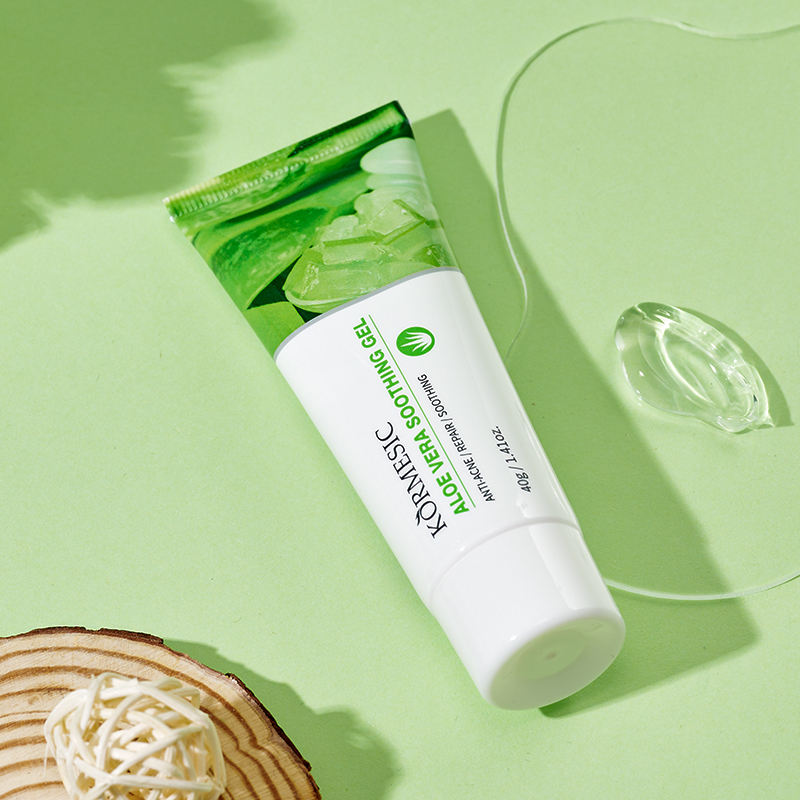
Gel Structure: The Limited Options
A gel is built from a gelling agent, water, humectants and the active portion, with no emulsifier and no oil phase. That leaves few places to hide a weak decision. A gelling system that produces a firm, brittle gel will break down under shear when the user scoops it; one that is too soft will look thin in the jar. Gel body has to be tuned for the way the product will be handled, not just for how it looks in a sample jar.
Electrolyte tolerance is the second constraint. Aloe materials bring dissolved solids into the water phase, and many common gelling agents lose viscosity in the presence of electrolytes. Electrolyte compatibility should be tested with the actual aloe input, because results differ markedly between grades. Reference gel and cream formats are listed in the current product range.
Juice, Concentrate or Powder
Aloe is supplied in several forms: fresh juice, concentrated juice, and spray-dried powder. The choice affects colour, odour, label declaration and cost. Powder and concentrate give a more consistent base, while single-strength juice carries a fresher character and a shorter usable window.
The larger risk with natural juices is microbiological load at receipt. Even a well-filtered juice can introduce organisms that the finished-goods preservation system then has to overcome on its own. Specify the incoming microbiological limits and the preservation method used at the raw material stage, not only the finished-product result.
What the label can and cannot say
Wording such as a stated purity figure is common in this category and is a place where claim discipline matters, because documentation has to substantiate whatever number is printed. Any figure on the pack needs a documented basis, or the claim becomes the product's weakest point. A related moisturising direction is shown in this brightening gel reference.
Preservation in a Water-Rich, Oil-Free Base
An oil-free gel has no oil phase to create a hostile environment for microorganisms, so it depends heavily on the preservative system, the pH and the way the user handles the pack. Preservation is the single most important design decision in a gel, and it is the one most often treated as a line item.
Lowering water activity through humectant content helps, as does raising the solids level. Both approaches change texture, so trade-offs have to be made deliberately rather than discovered at sampling. Decide whether the formula or the pack will carry the protection burden, and design that one properly. Cleanroom and filling conditions are described in the workshop overview.
Cooling and After-Sun Positioning
After-sun formats add a sensory requirement: the product should feel cool and light on application, which usually means a low oil content and volatile components that evaporate on the skin. The cooling sensation comes from the evaporation profile, not from the ingredient story.
Alcohol-based and alcohol-free routes each carry consequences. Alcohol delivers a strong immediate cooling effect but dries the skin and complicates compatibility with some gelling agents and actives. If alcohol is used, the level should be justified by the sensory target and documented, because it changes the preservation and compatibility picture. A soothing cream used alongside a gel is shown in this after-sun reference.
Claims and the Documentation File
Claims for gel and after-sun products tend to drift toward soothing and restorative language, which sits closer to the medical line than most skincare copy. Wording should describe appearance and user experience and avoid any implication of physiological effect. Rewrite any claim that describes what the body does rather than what the product does.
Three items belong in the specification: the incoming limits for the aloe input, the challenge test method run on the finished gel in its final pack, and the net content tolerance for a high-volume fill. Net content tolerance is easy to hold in a cream and considerably harder in a low-viscosity gel, which is why it belongs in the agreement rather than in a conversation. Manufacturer documentation is summarised on the about us page, and specifications can be submitted through the inquiry form.
Aloe and after-sun formats sell on perceived freshness and are used in the least controlled conditions of any category. Build the gel body around how it will be handled, protect it in the pack, and keep the claims strictly to what the file supports. Send your concept through the contact page to scope a sampling plan.
Frequently asked questions
Can you produce Aloe Vera Gel and After-Sun Care OEM under our own brand?
Aloe Vera Gel and After-Sun Care OEM is handled as a private label project: you bring the brand and the market position, we cover formula, bulk, filling and packing. Existing bases can be adjusted for texture, fragrance and active level, or we develop from a new brief. Tooling and artwork belong to you, and our name does not appear on the pack.
What is the minimum order quantity?
MOQ is set by net fill per unit, not by category:
| Net fill | MOQ |
|---|---|
| < 15 ml/g | 5,000 pcs |
| 15-50 ml/g (50 included) | 3,000 pcs |
| 50-200 ml/g (200 included) | 2,000 pcs |
| > 200 ml/g | 1,000 pcs |
Several SKUs in one project can share a production run to reach the threshold, and a smaller trial order is possible once the formula is approved.
How long do samples and bulk production take?
Samples take 7-10 working days from a confirmed brief, or 10-15 days when a new mould or artwork is involved. Bulk runs 25-35 days after sample approval and packaging arrival. Repeat orders with an unchanged formula usually move faster.
Which certificates and documents come with the shipment?
The plant runs under GMPC and ISO 22716 with a 100,000-class cleanroom. Each shipment can include COA, MSDS, the full INCI list, stability data and microbiological reports. For the EU we support CPSR and PIF paperwork; for other markets we prepare the file set your importer asks for.
Can we change the formula, fragrance or packaging?
Yes. Texture, viscosity, fragrance, colour and active percentage are adjustable within regulatory limits. Packaging can be sourced by you or by us: tubes, airless bottles, jars, sachets and aluminium foil bags, with silkscreen, hot stamping or label application.
What information do you need to quote?
Category and target function, quantity per SKU, packaging direction, destination market and launch date. With that we reply within 24 hours on business days with feasibility, MOQ and a price range. An NDA can be signed before formulas are discussed.
Need this produced? Talk to the factory.
Wangsha Bio has run OEM/ODM production since 2006: 60,000 sqm plant, 17 lines, 100,000-class cleanroom, GMPC and ISO 22716 certified. Send your brief and we reply within 24 hours on business days with feasibility, MOQ and a price range.
Email lucky@moksha-bio.com | Product range | Workshop