Qingyuan moksha Biotechnology Co., Ltd


Pet shampoo sits in a category that is sometimes treated as human shampoo with a different label on the bottle. Developing it that way produces products that clean badly, dry the coat, or leave a scent the animal objects to. Animal skin has a different pH range, a thinner epidermis in several species, and a coat that holds residue far longer than human hair. A pet formula is a separate brief, not a repackaged one. This guide covers the specification items that separate a workable pet shampoo from a failed launch.
Why Pet Formulas Differ From Human Shampoo
The first difference is the surface the product works on. Coat density, oil composition and skin thickness vary by species and by breed, and a product intended for cats and dogs should ideally not be designed as one formula for both. The second difference is behaviour after rinsing: animals groom themselves, which means residue on the coat can be ingested. Residue that is tolerable on human skin can be a genuine concern on an animal that licks its coat.
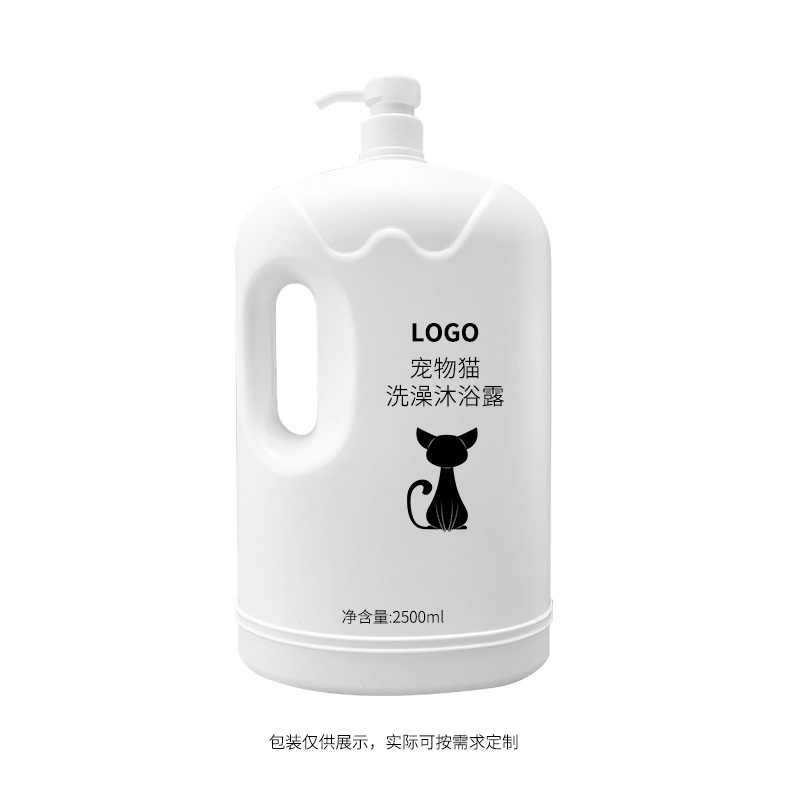
The third difference is the user. Pet owners wash an animal occasionally rather than daily, in an uncontrolled setting, often without a full rinse. Formula design should assume a shorter rinse and a higher chance of residue. Design for the rinse the animal will actually get, not for the ideal one in the instruction leaflet. Existing formats in the range include this herbal cat shampoo.
pH Targets and Surfactant Choice
Animal skin sits in a different pH range from human skin, and a formula at human-scalp pH can be irritating over repeated use. The practical approach is to set the pH target for the target species and confirm it with the manufacturer rather than defaulting to a human value. State the target species on the brief, because pH and surfactant choice both follow from it.
Surfactant selection follows the same logic. Mild non-ionic and amphoteric systems reduce irritation and clean adequately for regular use, while stronger anionic systems deliver more lather and more degreasing for heavily soiled coats. Most commercial pet shampoos blend two or three types. The blend ratio is the part of the formula that needs the most sampling iterations.
Conditioning and detangling claims
Conditioning agents and detangling polymers improve combing and reduce matting, which is one of the few attributes pet owners evaluate immediately. They also change how the coat feels and how quickly it soils again. Where a conditioning claim is made, the supporting work should be defined with the project rather than after it. A related grooming direction is shown in this dog shampoo reference.
Ingredient Selection and Wording to Avoid
Fragrance is the most difficult input in this category. Pets have a much stronger sense of smell, and a scent that reads as fresh to a human can be overwhelming to an animal. Load level should be set lower than for an equivalent human product, and the accord should be chosen deliberately. A mildly scented pet shampoo is easier to sell twice than a strongly scented one.
Wording deserves attention for a different reason. Pet care sits in a different regulatory space from cosmetics, and several markets restrict or scrutinise claims about parasites, infections and insect control. Wording that implies a veterinary or medical effect should be removed from the brief at the concept stage. Every claim should describe the product's cleaning or grooming performance rather than an effect on the animal's body.
Safety Documentation and Testing
Documentation expectations vary by market, and buyers increasingly ask for more than a safety data sheet. The practical set includes formula documentation, incoming raw material specifications, preservative system details, a challenge test on the finished product in its final pack, and stability data. Incoming microbiological limits for botanical inputs matter more here than in many cosmetic categories, because natural extracts and herbal actives are common.
Stability testing should include three temperature conditions and an odour assessment at each checkpoint. Odour drift is the most common consumer-visible defect in pet shampoo, and it is often caused by an unstable botanical input rather than the fragrance. Assess odour at every checkpoint, because a coat that smells wrong after washing is a product failure the owner notices immediately. Filling and cleanroom conditions are described in the workshop overview.
Pack Format and Specification Items
Pet shampoo is usually sold in 300ml to 500ml bottles with a flip-top or press-top cap, and increasingly in large refill formats for multi-pet households. Pet owners use more product per wash than human users do, which makes a large pack an advantage and puts pressure on fill accuracy. Low-viscosity, high-foam formulas are harder to fill accurately than thick ones. Net content tolerance belongs in the specification, not in a conversation after the first batch.
Four items belong in the written agreement: the pH target with tolerance, the challenge test method on the finished pack, the fragrance load level, and the documentation set the brand requires. Manufacturer capabilities are described in the workshop overview, credentials appear on the about us page, and briefs can be submitted through the contact page.
Pet grooming is a category where owners notice the result the same evening. Set the pH for the species, keep the fragrance restrained, document the inputs, and hold the fill accuracy. Get those four right and the product earns its place in the bathroom, not just on the shelf.
Frequently asked questions
Can you produce Pet Shampoo OEM under our own brand?
Pet Shampoo OEM is handled as a private label project: you bring the brand and the market position, we cover formula, bulk, filling and packing. Existing bases can be adjusted for texture, fragrance and active level, or we develop from a new brief. Tooling and artwork belong to you, and our name does not appear on the pack.
What is the minimum order quantity?
MOQ is set by net fill per unit, not by category:
| Net fill | MOQ |
|---|---|
| < 15 ml/g | 5,000 pcs |
| 15-50 ml/g (50 included) | 3,000 pcs |
| 50-200 ml/g (200 included) | 2,000 pcs |
| > 200 ml/g | 1,000 pcs |
Several SKUs in one project can share a production run to reach the threshold, and a smaller trial order is possible once the formula is approved.
How long do samples and bulk production take?
Samples take 7-10 working days from a confirmed brief, or 10-15 days when a new mould or artwork is involved. Bulk runs 25-35 days after sample approval and packaging arrival. Repeat orders with an unchanged formula usually move faster.
Which certificates and documents come with the shipment?
The plant runs under GMPC and ISO 22716 with a 100,000-class cleanroom. Each shipment can include COA, MSDS, the full INCI list, stability data and microbiological reports. For the EU we support CPSR and PIF paperwork; for other markets we prepare the file set your importer asks for.
Can we change the formula, fragrance or packaging?
Yes. Texture, viscosity, fragrance, colour and active percentage are adjustable within regulatory limits. Packaging can be sourced by you or by us: tubes, airless bottles, jars, sachets and aluminium foil bags, with silkscreen, hot stamping or label application.
What information do you need to quote?
Category and target function, quantity per SKU, packaging direction, destination market and launch date. With that we reply within 24 hours on business days with feasibility, MOQ and a price range. An NDA can be signed before formulas are discussed.
Need this produced? Talk to the factory.
Wangsha Bio has run OEM/ODM production since 2006: 60,000 sqm plant, 17 lines, 100,000-class cleanroom, GMPC and ISO 22716 certified. Send your brief and we reply within 24 hours on business days with feasibility, MOQ and a price range.
Email lucky@moksha-bio.com | Product range | Workshop