Qingyuan moksha Biotechnology Co., Ltd


Botanical extracts give a private label range its story: green tea, centella, rice, licorice, algae. They also introduce the largest uncontrolled variable in most formulas, because the input arrives with a composition that changes with harvest, origin and extraction method. A botanical extract is a raw material with a variable composition, and it should be specified like one.
Three Routes to a Workable Specification
The first route is a standardised extract, purchased against a declared content of one or more marker compounds with a stated tolerance. The second is a purified isolate, where a single molecule is supplied to a tight assay. The third is a conventional extract qualified by physical parameters alone. Standardisation on a marker compound is the only route that lets a formula claim a content figure with a file behind it.
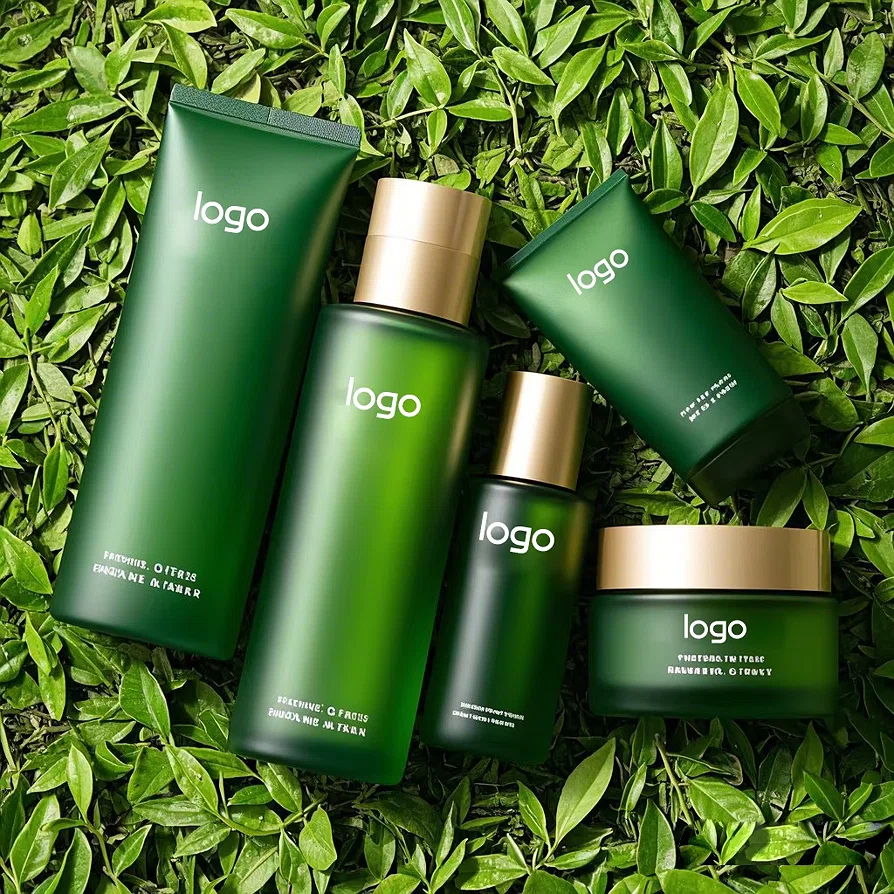
Each route carries a different cost and a different level of flexibility. Isolates are the most predictable and the most expensive; conventional extracts are the cheapest and the most variable. Choosing the route is a business decision as much as a technical one, and it should be made before the brief is written. A botanical set direction is shown in this green tea extract skincare set.
What Batch Variation Looks Like
Variation shows up in four places: colour, odour, solids content and microbiological load. Colour and odour variation is the most visible to the consumer, especially in white or pale emulsions. Solids content changes viscosity and can shift preservation performance, and microbiological load is the risk that ends up as a complaint. Each of the four needs an incoming limit, because a single overall specification hides the one that actually caused the failure.
Some variation can be designed around. Using the extract in an opaque pack or in a tinted emulsion reduces the visibility of colour drift, and a fragrance can mask modest odour differences. Designing around variation is usually cheaper than demanding an impossible tolerance from a natural material.
Incoming Quality Control That Actually Works
An incoming programme for botanicals typically includes appearance, colour, odour, pH, solids or assay, microbiological limits and a preservative or carrier declaration. The assay item is the one that most often separates a standardised purchase from a conventional one. Without an assay on the incoming material, a content claim on the pack has no traceable basis.
Retained samples from each incoming lot make later investigations possible. Where a defect appears in the finished product months after filling, the retained input sample is often the only way to establish whether the batch or the input caused it. Retention of incoming botanical lots is a low-cost practice that shortens every future investigation. Raw material handling and storage conditions are described in the workshop overview.
Formulation Around a Variable Input
Where the input varies, the formula should be designed with tolerance rather than precision. Choose a gelling system that copes with electrolyte variation, buffer the pH, and avoid depending on a narrow window for viscosity. Formulas that are robust across a range of input quality are worth more than formulas that perform only with one favourable lot.
Antioxidant support and chelation help with the oxidative changes that botanical inputs are prone to, and both should be designed as components rather than added as insurance at the end. Adding stabilisers late in development usually invalidates the stability data collected before them.
Documentation Buyers Should Request
The practical document set includes the current specification with assay and tolerance, the safety data sheet, the origin and extraction route statement, the microbiological limits, a preservative or carrier declaration and, where relevant, a statement on solvent residues. Buyers who request the same set from every supplier can compare inputs on evidence rather than on price alone.
Three items belong in the written agreement: the incoming specification with tolerances for each parameter, the change-notification requirement for origin or extraction changes, and the retention period for incoming samples. Credentials appear on the about us page, the wider range is listed under the product range, and specifications can be submitted through the inquiry form.
Botanical extracts are the most attractive and the least controlled inputs in a skincare brief. Standardise what can be standardised, set limits on what cannot, and design the formula to survive the range rather than one lucky batch.
Frequently asked questions
Can you produce Botanical Extract Standardisation in Private Label under our own brand?
Botanical Extract Standardisation in Private Label is handled as a private label project: you bring the brand and the market position, we cover formula, bulk, filling and packing. Existing bases can be adjusted for texture, fragrance and active level, or we develop from a new brief. Tooling and artwork belong to you, and our name does not appear on the pack.
What is the minimum order quantity?
MOQ is set by net fill per unit, not by category:
| Net fill | MOQ |
|---|---|
| < 15 ml/g | 5,000 pcs |
| 15-50 ml/g (50 included) | 3,000 pcs |
| 50-200 ml/g (200 included) | 2,000 pcs |
| > 200 ml/g | 1,000 pcs |
Several SKUs in one project can share a production run to reach the threshold, and a smaller trial order is possible once the formula is approved.
How long do samples and bulk production take?
Samples take 7-10 working days from a confirmed brief, or 10-15 days when a new mould or artwork is involved. Bulk runs 25-35 days after sample approval and packaging arrival. Repeat orders with an unchanged formula usually move faster.
Which certificates and documents come with the shipment?
The plant runs under GMPC and ISO 22716 with a 100,000-class cleanroom. Each shipment can include COA, MSDS, the full INCI list, stability data and microbiological reports. For the EU we support CPSR and PIF paperwork; for other markets we prepare the file set your importer asks for.
Can we change the formula, fragrance or packaging?
Yes. Texture, viscosity, fragrance, colour and active percentage are adjustable within regulatory limits. Packaging can be sourced by you or by us: tubes, airless bottles, jars, sachets and aluminium foil bags, with silkscreen, hot stamping or label application.
What information do you need to quote?
Category and target function, quantity per SKU, packaging direction, destination market and launch date. With that we reply within 24 hours on business days with feasibility, MOQ and a price range. An NDA can be signed before formulas are discussed.
Need this produced? Talk to the factory.
Wangsha Bio has run OEM/ODM production since 2006: 60,000 sqm plant, 17 lines, 100,000-class cleanroom, GMPC and ISO 22716 certified. Send your brief and we reply within 24 hours on business days with feasibility, MOQ and a price range.
Email lucky@moksha-bio.com | Product range | Workshop