Qingyuan moksha Biotechnology Co., Ltd


One of the first questions a formulator asks about a new brief is whether the product should be an oil-in-water or a water-in-oil emulsion. The question sounds like a technical detail, yet it sets the sensory direction, the pack format, the cost structure and even the filling method. Choose the wrong emulsion type and every later adjustment becomes a repair job on the wrong foundation. This guide sets out how the two systems differ, where each belongs, and which failures each one produces.
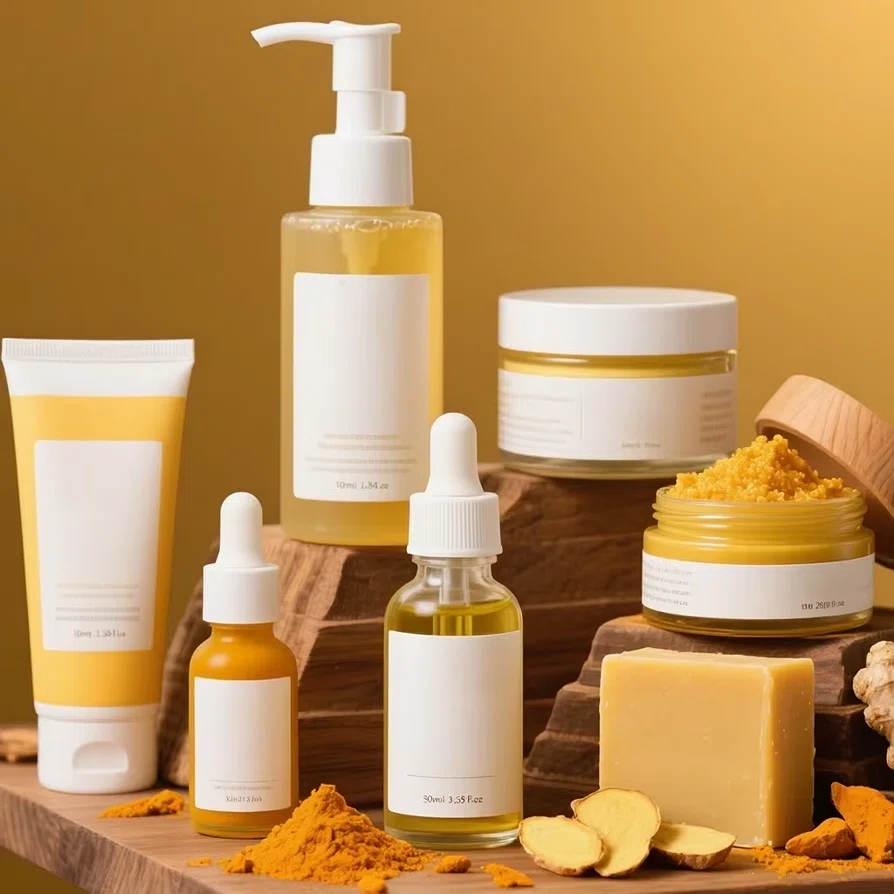
The Basic Difference Between the Two Systems
In an oil-in-water system the continuous phase is water, so the first sensation on application is a light, watery slip before the internal oil phase delivers emollience. In a water-in-oil system the continuous phase is oil, so the product feels richer at once and leaves a relatively occlusive film. The continuous phase decides the first impression and the internal phase decides what happens afterwards.
Three questions usually settle the choice: does the product need a light spreading feel, does it need water and sweat resistance, and which skin types dominate the target market. When a brief is unclear, define the skin-type mix before debating the ingredient list. Existing cream and lotion formats are listed in the product range.
Oil-in-Water: The General-Purpose Route
Oil-in-water is the most widely used route in skincare. It spreads lightly, the process is well understood, packaging compatibility is broad and unit cost is comparatively easy to control. Its limits are water resistance and occlusion: in humid conditions or during sweating, the film breaks down sooner. The system suits everyday care, and a high-humidity end use calls for additional film-forming design.
Stability problems in this family concentrate in emulsifier choice and the thickening network. Too little emulsifier and the emulsion separates; too much and the product can feel tacky or turn white on rubbing. Emulsion design is a balance problem, so the answer is a ratio rather than more or less of anything. A light water-phase reference is shown in this cream for redness-prone skin.
Water-in-Oil: Occlusion and Process Demands
Water-in-oil systems deliver occlusion and water resistance because the oil phase forms a more continuous film on the skin. They suit dry skin types and winter ranges. The cost is a narrower process window: the system usually needs a higher emulsification temperature and stronger shear, and the cooling-stage agitation speed directly affects crystallisation and particle size. Every process parameter for a water-in-oil batch has to be confirmed rather than scaled from experience.
Why the pack has to be chosen at the same time
Water-in-oil products are usually thicker, so a pump dispenser is harder to specify and a tube or jar is more common. These systems are also more sensitive to the inner surface of the pack, and some materials show migration or swelling over time. Pick the pack together with the system, because changing one afterwards means reformulating the other. A lighter texture for contrast is shown in this whipped balm reference.
Stability and Sensory Testing Differ
The failure modes differ by system. Oil-in-water products are watched for separation, syneresis and viscosity drift, while water-in-oil products are watched for oil exudation, particle coarsening and structural softening at elevated temperature. Test protocols have to be matched to the system, because a single checklist will miss the failure that matters.
Sensory evaluation needs the same adjustment. A water-in-oil product leaves more residue and spreads more slowly, so the observation window should extend beyond fifteen minutes. A window that is too short hides what the product actually does on skin. Process and filling conditions are described in the workshop overview.
Cost, Scale and Range Planning
The cost structure favours oil-in-water in most cases, because the water phase dominates and the unit cost is easier to hold. Water-in-oil products carry a higher oil loading, which lifts both raw material and packaging cost. An emulsion choice also sets the price band of the finished product, so it is a commercial decision as much as a technical one.
Scale adds a further constraint. High-shear, high-temperature processes place specific demands on production equipment and tend to lengthen the first bulk schedule. Writing process requirements into the project timeline early avoids the rush that comes from a late change. Manufacturer credentials are summarised on the about us page, and requirements can be submitted through the contact page.
Emulsion type is the earliest and widest-reaching decision in a formulation. Decide it with the positioning, the process, the pack and the cost in the same discussion, and the project stops looping back to the same question.
Frequently asked questions
Can you produce Emulsion Systems in Private Label Skincare under our own brand?
Emulsion Systems in Private Label Skincare is handled as a private label project: you bring the brand and the market position, we cover formula, bulk, filling and packing. Existing bases can be adjusted for texture, fragrance and active level, or we develop from a new brief. Tooling and artwork belong to you, and our name does not appear on the pack.
What is the minimum order quantity?
MOQ is set by net fill per unit, not by category:
| Net fill | MOQ |
|---|---|
| < 15 ml/g | 5,000 pcs |
| 15-50 ml/g (50 included) | 3,000 pcs |
| 50-200 ml/g (200 included) | 2,000 pcs |
| > 200 ml/g | 1,000 pcs |
Several SKUs in one project can share a production run to reach the threshold, and a smaller trial order is possible once the formula is approved.
How long do samples and bulk production take?
Samples take 7-10 working days from a confirmed brief, or 10-15 days when a new mould or artwork is involved. Bulk runs 25-35 days after sample approval and packaging arrival. Repeat orders with an unchanged formula usually move faster.
Which certificates and documents come with the shipment?
The plant runs under GMPC and ISO 22716 with a 100,000-class cleanroom. Each shipment can include COA, MSDS, the full INCI list, stability data and microbiological reports. For the EU we support CPSR and PIF paperwork; for other markets we prepare the file set your importer asks for.
Can we change the formula, fragrance or packaging?
Yes. Texture, viscosity, fragrance, colour and active percentage are adjustable within regulatory limits. Packaging can be sourced by you or by us: tubes, airless bottles, jars, sachets and aluminium foil bags, with silkscreen, hot stamping or label application.
What information do you need to quote?
Category and target function, quantity per SKU, packaging direction, destination market and launch date. With that we reply within 24 hours on business days with feasibility, MOQ and a price range. An NDA can be signed before formulas are discussed.
Need this produced? Talk to the factory.
Wangsha Bio has run OEM/ODM production since 2006: 60,000 sqm plant, 17 lines, 100,000-class cleanroom, GMPC and ISO 22716 certified. Send your brief and we reply within 24 hours on business days with feasibility, MOQ and a price range.
Email lucky@moksha-bio.com | Product range | Workshop