Qingyuan moksha Biotechnology Co., Ltd


Consumers with coloured or chemically treated hair have a more specific set of expectations than the average shampoo buyer: the colour should last, the fibre should feel smooth, and the scalp should not react. Those three expectations map onto colour retention, repair and mildness, three technical directions that do not always pull in the same direction. The challenge in colour care shampoo is balance rather than excellence in any single parameter. This guide covers the development decisions that matter.
Start With the Audience Priority
Consumers who colour their hair and those who permanently wave it do not want the same thing. Colour-treated hair is judged on colour vividness and shine, while chemically waved hair is judged on smoothness and spring. Tolerance to cleansing strength also differs between the two groups. Decide the primary audience before allocating weight inside the formula.
Once the audience is fixed, the positioning follows: a daily product built around gentle cleansing with repair support, or a treatment-led product where repair leads and cleansing follows. Reference formats are listed in the product range.
Surfactant System and Mildness
Colour-treated fibre has a raised cuticle and a compromised surface, so a strongly cleansing surfactant system accelerates colour loss and increases roughness. Amino acid surfactants are widely used in this category because their cleansing strength is comparatively gentle and their compatibility with cationic conditioning agents is good. The surfactant system decides colour retention more than any single additive, which makes it the first decision in the brief.
Blending is standard practice: a mild primary surfactant with a small amount of a stronger one to protect foam volume and sebum removal. Blend ratios should be compared on genuinely colour-treated hair swatches during sampling. Testing on dyed swatches is far closer to real behaviour than testing on virgin hair.
Colour Retention and Conditioning
Colour retention work follows two routes: reducing colour loss through gentle cleansing and pH control, and depositing a conditioning layer on the fibre surface. The two routes can be combined. Colour retention is a property of the whole system rather than of one ingredient.
Deposition and rinse feel
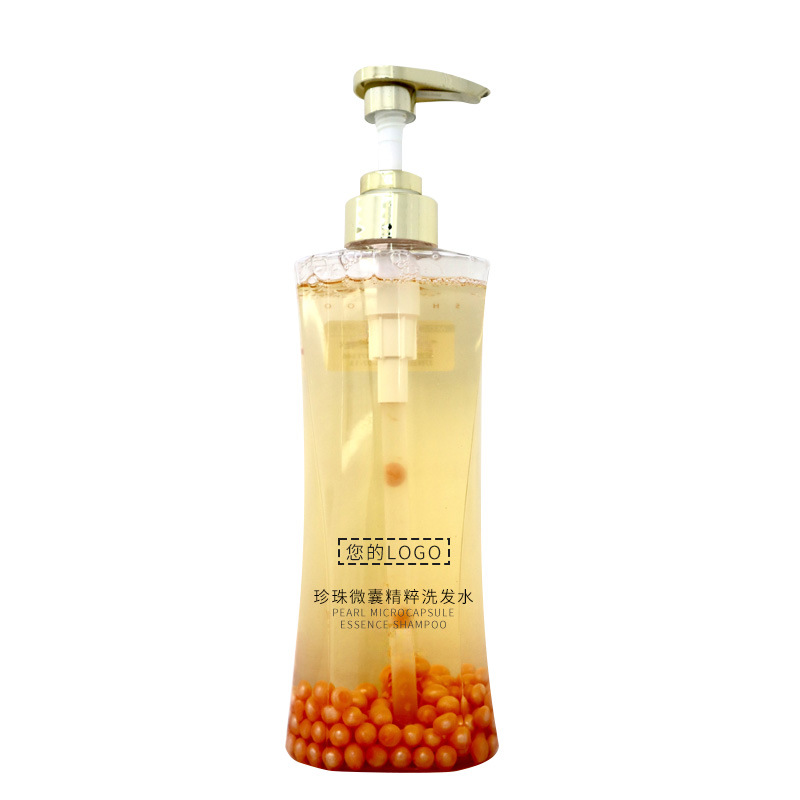
Cationic conditioning agents deposit well on damaged fibre and improve smoothness, but a high level produces heavy deposition and a tacky feel. The target is enough deposition to satisfy the damaged areas without leaving excess behind. Deposition level has to be set against the feel after rinsing, because reading the formula ratio alone is misleading. A related colour care direction is shown in this caviar shampoo reference.
Stability and Packaging
Shampoos containing conditioning agents can separate or drift in viscosity during storage, particularly through channels with wide temperature swings. Stability work should cover three temperature conditions and record viscosity as well as appearance. Viscosity drift is the most common failure mode in these systems and needs to be tracked separately.
On packaging, viscosity has to be matched to the pump or flip-top, and larger formats need to hold their seal in a humid shower environment. Settling formula and pack together avoids a forced reformulation once filling begins.
Sensory Targets and Claims
Claims for this category belong with appearance and experience: the visible retention of colour, shine and smoothness of the fibre, and the feel after washing. Wording that implies an effect on scalp physiology should be avoided. Anchoring claims to user experience keeps them both defensible and relevant.
On the sensory side, foam fineness, rinse speed and lingering scent all influence the verdict. Foam and rinse feel are significant drivers of repeat purchase in hair care and deserve a dedicated score at sampling. Manufacturing conditions are described in the workshop overview, and manufacturer credentials appear on the about us page.
Colour care shampoo leaves no room for shortcuts: colour retention, fibre smoothness and scalp comfort have to be achieved inside one system. Stabilise the surfactant and conditioning system first, then tune the sensory details, and the product will behave consistently. Send your brief through the contact page to begin sampling.
Frequently asked questions
Can you produce Colour-Treated Hair Shampoo OEM under our own brand?
Colour-Treated Hair Shampoo OEM is handled as a private label project: you bring the brand and the market position, we cover formula, bulk, filling and packing. Existing bases can be adjusted for texture, fragrance and active level, or we develop from a new brief. Tooling and artwork belong to you, and our name does not appear on the pack.
What is the minimum order quantity?
MOQ is set by net fill per unit, not by category:
| Net fill | MOQ |
|---|---|
| < 15 ml/g | 5,000 pcs |
| 15-50 ml/g (50 included) | 3,000 pcs |
| 50-200 ml/g (200 included) | 2,000 pcs |
| > 200 ml/g | 1,000 pcs |
Several SKUs in one project can share a production run to reach the threshold, and a smaller trial order is possible once the formula is approved.
How long do samples and bulk production take?
Samples take 7-10 working days from a confirmed brief, or 10-15 days when a new mould or artwork is involved. Bulk runs 25-35 days after sample approval and packaging arrival. Repeat orders with an unchanged formula usually move faster.
Which certificates and documents come with the shipment?
The plant runs under GMPC and ISO 22716 with a 100,000-class cleanroom. Each shipment can include COA, MSDS, the full INCI list, stability data and microbiological reports. For the EU we support CPSR and PIF paperwork; for other markets we prepare the file set your importer asks for.
Can we change the formula, fragrance or packaging?
Yes. Texture, viscosity, fragrance, colour and active percentage are adjustable within regulatory limits. Packaging can be sourced by you or by us: tubes, airless bottles, jars, sachets and aluminium foil bags, with silkscreen, hot stamping or label application.
What information do you need to quote?
Category and target function, quantity per SKU, packaging direction, destination market and launch date. With that we reply within 24 hours on business days with feasibility, MOQ and a price range. An NDA can be signed before formulas are discussed.
Need this produced? Talk to the factory.
Wangsha Bio has run OEM/ODM production since 2006: 60,000 sqm plant, 17 lines, 100,000-class cleanroom, GMPC and ISO 22716 certified. Send your brief and we reply within 24 hours on business days with feasibility, MOQ and a price range.
Email lucky@moksha-bio.com | Product range | Workshop