Qingyuan moksha Biotechnology Co., Ltd


Eye products are the most expensive millilitres in the skincare range and the hardest to get tolerated. The skin around the eye is thinner than elsewhere on the face, is moved constantly by blinking and expression, and sits close to the eye itself, which makes every compatibility question sharper. Eye products are judged on tolerance first and on any other benefit second. This guide covers what to settle with a manufacturer on creams and patch formats alike.
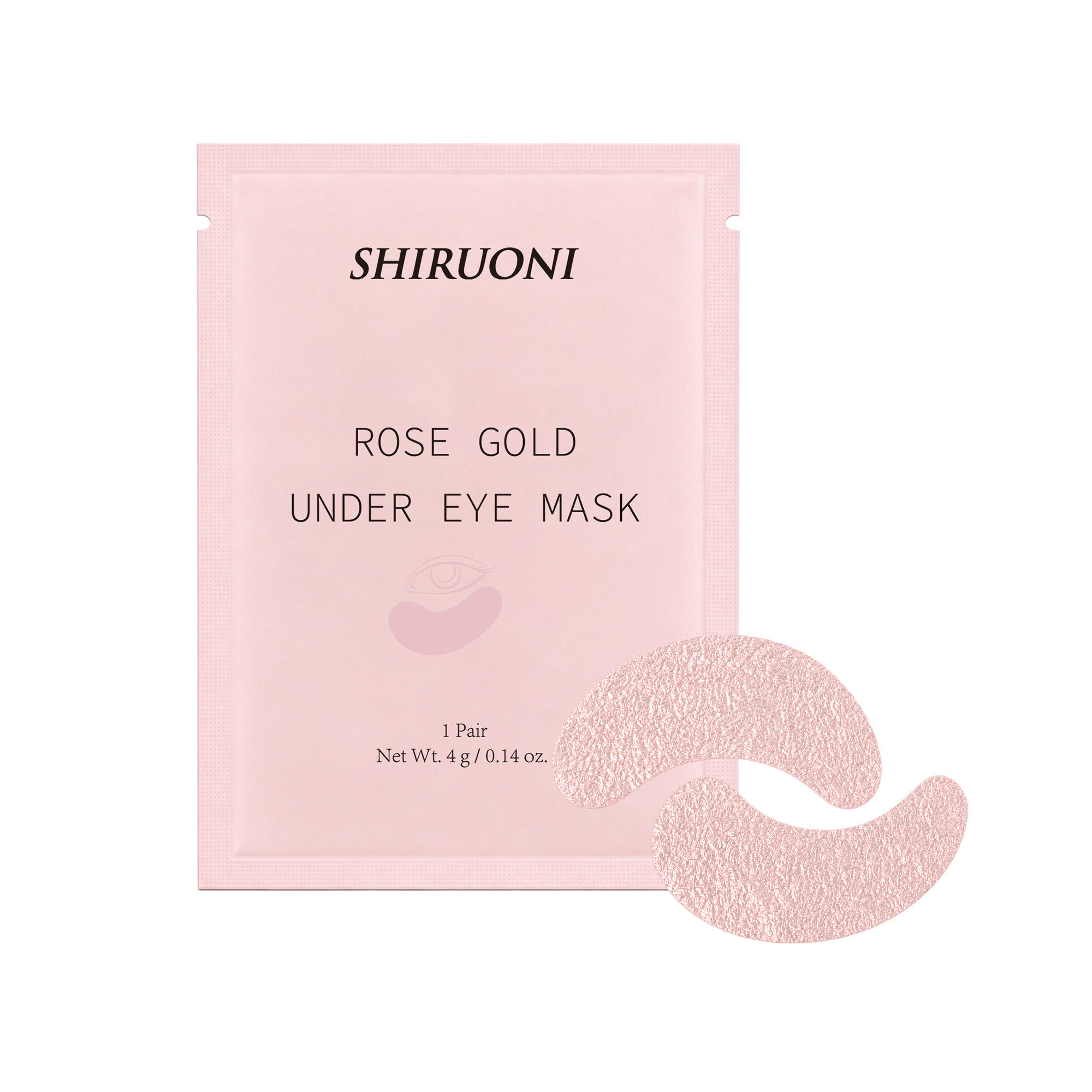
What Makes the Eye Area Different
The thinner skin means materials cross it more readily and irritants produce a visible response faster. Movement means a product that does not stay put will migrate, and migration toward the eye is the complaint that ends a product's life quickly. A texture that migrates is a safety issue in this category, not a preference.
The format also narrows the choices. Creams and gels have to be spread with a fingertip on an area where pressure is unwelcome, so drag matters more than in a face cream. Patches remove that problem entirely by holding the product against the skin without rubbing. The two formats solve different problems and are worth developing as a pair rather than as substitutes. Existing eye-area formats are listed in the product range.
Actives Suitable for Eye Products
The useful actives here tend to be well-tolerated humectants and peptides rather than aggressive materials. Low molecular weight hyaluronic acid, glycerin, panthenol, caffeine and a range of peptides all appear routinely, usually supported by a simple, short ingredient list. A short list reads as careful in this category and also reduces the compatibility questions to answer.
High-dosage acids and strong antioxidant systems are poor fits, and materials that carry a warming or tingling sensation on application are almost never acceptable so close to the eye. If a sensation is designed to signal activity elsewhere, that sensation becomes a defect here. A related brightening and hydrating direction is shown in this centella ampoule reference.
Carriers and delivery
Where an active has poor stability or needs targeting, encapsulation can separate it from the rest of the base and shape its release. The trade-off is unit cost and a more complex specification, so it should be justified by a real stability or delivery need.
Texture Targets and Application Feel
The texture brief for an eye product is narrow: it should be light enough to spread with minimal pressure, absorb without a tacky residue, and stay where it is placed. Rich, slow-absorbing textures that work on the cheeks are usually wrong here. Design the texture around the light touch the area demands, not around how protective it feels on the finger.
Spreadability and residue are the two attributes worth measuring with a small trained panel, using a fixed quantity on a fixed site and a fixed scoring time. Comparing three or four variants in one session gives a usable ranking. Scoring residue at a set interval turns a subjective argument about heaviness into a repeatable result.
Patches, Hydrogel and Delivery Formats
Patches split into hydrogel types and fibre-based types. Hydrogel patches are made from a cross-linked water-based matrix, hold an amount of serum inside the structure, and deliver it over a defined wear time. Their feel is cool and they stay in place without adhesive. Wear time and moisture retention are the defining performance attributes of a hydrogel patch, and both are set by the matrix, not by the serum.
Fibre-based and foil-backed patches give a tighter seal and can carry a more fluid serum, which suits a shorter, more intensive use. The cut shape also matters commercially, since a patch that does not sit flat under the eye will be reported as uncomfortable regardless of the formula. Patch geometry should be validated on real faces before the cutting die is ordered. A complementary mask format is shown in this under-eye patch reference.
Tolerance, Testing and Claims
Because the area is sensitive and the dose delivered by a patch is comparatively high, tolerance work should be planned early rather than added before launch. Patch testing on a suitable panel, plus the standard stability programme on the finished pack, forms the minimum evidence set. For patches, stability has to cover the serum, the matrix and the sealed pouch together, because failure can occur in any of the three.
Claims for eye products drift toward the medical line faster than in any other category, particularly wording about puffiness, dark circles and the appearance of the area. Wording should stay with appearance and user experience. Anything that reads as a change to how the body behaves is outside the claim boundary. Manufacturer documentation is summarised on the about us page, and briefs can be submitted through the inquiry form.
Eye products sell on the promise of visible care in the most delicate area of the face. Keep the ingredient list short, design the texture around a light touch, validate the patch geometry on real faces, and hold claims to appearance. Send your brief through the contact page to scope a sampling plan.
Frequently asked questions
Can you produce Eye Cream and Under-Eye Patch OEM under our own brand?
Eye Cream and Under-Eye Patch OEM is handled as a private label project: you bring the brand and the market position, we cover formula, bulk, filling and packing. Existing bases can be adjusted for texture, fragrance and active level, or we develop from a new brief. Tooling and artwork belong to you, and our name does not appear on the pack.
What is the minimum order quantity?
MOQ is set by net fill per unit, not by category:
| Net fill | MOQ |
|---|---|
| < 15 ml/g | 5,000 pcs |
| 15-50 ml/g (50 included) | 3,000 pcs |
| 50-200 ml/g (200 included) | 2,000 pcs |
| > 200 ml/g | 1,000 pcs |
Several SKUs in one project can share a production run to reach the threshold, and a smaller trial order is possible once the formula is approved.
How long do samples and bulk production take?
Samples take 7-10 working days from a confirmed brief, or 10-15 days when a new mould or artwork is involved. Bulk runs 25-35 days after sample approval and packaging arrival. Repeat orders with an unchanged formula usually move faster.
Which certificates and documents come with the shipment?
The plant runs under GMPC and ISO 22716 with a 100,000-class cleanroom. Each shipment can include COA, MSDS, the full INCI list, stability data and microbiological reports. For the EU we support CPSR and PIF paperwork; for other markets we prepare the file set your importer asks for.
Can we change the formula, fragrance or packaging?
Yes. Texture, viscosity, fragrance, colour and active percentage are adjustable within regulatory limits. Packaging can be sourced by you or by us: tubes, airless bottles, jars, sachets and aluminium foil bags, with silkscreen, hot stamping or label application.
What information do you need to quote?
Category and target function, quantity per SKU, packaging direction, destination market and launch date. With that we reply within 24 hours on business days with feasibility, MOQ and a price range. An NDA can be signed before formulas are discussed.
Need this produced? Talk to the factory.
Wangsha Bio has run OEM/ODM production since 2006: 60,000 sqm plant, 17 lines, 100,000-class cleanroom, GMPC and ISO 22716 certified. Send your brief and we reply within 24 hours on business days with feasibility, MOQ and a price range.
Email lucky@moksha-bio.com | Product range | Workshop