Qingyuan moksha Biotechnology Co., Ltd


Hair oil and leave-in treatments are among the easiest hair care products to launch and among the hardest to get right. On a shelf the category looks simple: a small bottle, a pump, a promise of shine. In use, the difference between a product that sells again and one that stays in a drawer is decided by how the oil phase spreads, how much residue it leaves behind, and whether the effect survives a humid afternoon. The core of a hair oil is not how much oil it contains, but how that oil spreads and how much of it stays on the fibre. This guide covers the decisions a brand owner should settle before sampling begins.
1. Choose the Format Before Anything Else
Leave-in hair products generally fall into three formats: pure oil, bi-phase (water and oil layers that need shaking), and emulsion or cream. Pure oil is the simplest structure and carries the strongest premium and fragrance story. Bi-phase feels lighter and suits younger channels. Emulsion formats can hold water-soluble actives and support a lighter-feel positioning. Format decides the cost structure and the packaging, so it has to be fixed before sampling. Pure oils demand precise dropper or orifice control; emulsions demand a pump that dispenses a consistent dose.
A useful starting point is to look at how established products in the category sit on the texture scale in our product range, then decide whether the new brief follows that reference or deliberately moves away from it. Once the format is fixed, carrier selection and stability work have a foundation.
2. Building the Carrier System
Most hair oils use three carrier layers: a light volatile silicone or alkane for slip, a mid-weight synthetic ester for spread and gloss, and a small amount of high-viscosity botanical oil for nourishment and story. The ratio between these three layers shapes the user experience far more than the brand of any single oil. Too much botanical oil reads well on the label but leaves a heavy residue, and fine hair collapses under it.
Watch the iodine value and oxidative stability of botanical oils. Jojoba and camellia hold up well as primary carriers; linseed and rosehip are better kept at low levels with a supporting antioxidant system. Oil oxidation shows up first as a change in odour and colour, and it is a frequent cause of shelf-life complaints. Build oxidation markers into the sample evaluation rather than waiting for a stability failure.
3. Anti-Frizz Architecture
Frizz comes from two sources: lifted cuticles and accumulated static. Formulators normally address it on three fronts. Cationic conditioning agents neutralise the negative charge on the fibre surface. Film-forming polymers press the cuticle flat. A small amount of oil lowers friction between fibres. Oil alone suppresses frizz briefly; the film system decides how long the effect lasts.
Film former compatibility with the oil phase needs checking early. Some acrylic polymers drop out of high-oil systems and leave a white floc. Run freeze-thaw and 45°C cycles at sample stage and inspect for separation. Small pilot batches are the cheapest place to catch this, and the team on the workshop floor can run them before any production scale-up is committed.
4. Silicone Alternatives That Actually Work
Silicone-free claims are well accepted in hair care, but simply removing dimethicone usually produces a product that feels dry and drags during combing. Three replacement routes work in practice. Light alkanes restore the slip that volatile silicones provided. Plant-derived esters restore part of the softness. Cationic guar or polyquaternium restores anti-static behaviour and wet combability. Replacing silicone means rebuilding an equivalent spread and conditioning system, not subtracting an ingredient.
Expect viscosity and clarity to shift after substitution, and re-check packaging compatibility at the same time. A formula that passes lab checks can still fail at the bottle if the pump was specified against the original rheology. Re-testing delivery performance is part of reformulation, not an afterthought.
5. Stability, Packaging and Claim Boundaries
Stability work for leave-in hair products focuses on three risks: oil separation at elevated temperature, haze at low temperature, and colour drift under light. Formulas with a high botanical load are best run on a twelve-week accelerated protocol in parallel with three months at ambient. Stability data should be generated in the final pack, because oxygen transmission differs between glass and plastic.
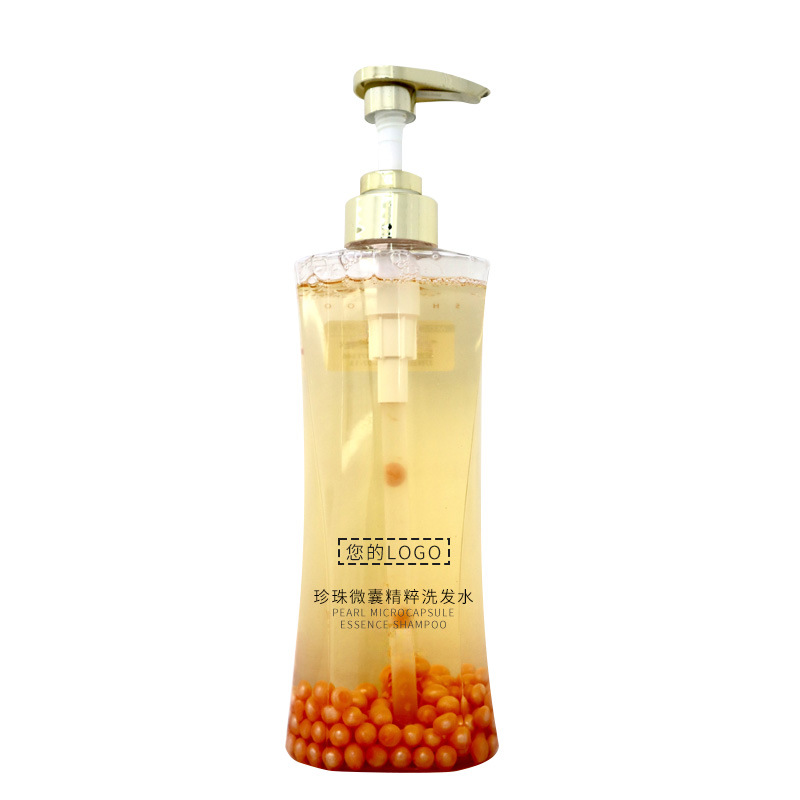
On claims, smoothness, easier combing and reduced frizz are descriptions a user can verify in use. Statements about repairing the hair core or promoting growth move into efficacy or medical territory and need supporting testing or filing. Keeping the verifiable and the unverifiable claims apart at artwork stage avoids expensive reprints later. Brands planning a full hair care range often start with a shampoo in the same fragrance family, then add the oil or leave-in as the second SKU. A caviar microcapsule shampoo is a useful reference for that paired development, and the product team can advise on matching the scent and conditioning level across the two. Send a brief through the inquiry form and the about us pages cover the facility and certification background buyers usually ask about first.
Frequently asked questions
Can you produce Hair Oil and Leave-In Treatment OEM under our own brand?
Hair Oil and Leave-In Treatment OEM is handled as a private label project: you bring the brand and the market position, we cover formula, bulk, filling and packing. Existing bases can be adjusted for texture, fragrance and active level, or we develop from a new brief. Tooling and artwork belong to you, and our name does not appear on the pack.
What is the minimum order quantity?
MOQ is set by net fill per unit, not by category:
| Net fill | MOQ |
|---|---|
| < 15 ml/g | 5,000 pcs |
| 15-50 ml/g (50 included) | 3,000 pcs |
| 50-200 ml/g (200 included) | 2,000 pcs |
| > 200 ml/g | 1,000 pcs |
Several SKUs in one project can share a production run to reach the threshold, and a smaller trial order is possible once the formula is approved.
How long do samples and bulk production take?
Samples take 7-10 working days from a confirmed brief, or 10-15 days when a new mould or artwork is involved. Bulk runs 25-35 days after sample approval and packaging arrival. Repeat orders with an unchanged formula usually move faster.
Which certificates and documents come with the shipment?
The plant runs under GMPC and ISO 22716 with a 100,000-class cleanroom. Each shipment can include COA, MSDS, the full INCI list, stability data and microbiological reports. For the EU we support CPSR and PIF paperwork; for other markets we prepare the file set your importer asks for.
Can we change the formula, fragrance or packaging?
Yes. Texture, viscosity, fragrance, colour and active percentage are adjustable within regulatory limits. Packaging can be sourced by you or by us: tubes, airless bottles, jars, sachets and aluminium foil bags, with silkscreen, hot stamping or label application.
What information do you need to quote?
Category and target function, quantity per SKU, packaging direction, destination market and launch date. With that we reply within 24 hours on business days with feasibility, MOQ and a price range. An NDA can be signed before formulas are discussed.
Need this produced? Talk to the factory.
Wangsha Bio has run OEM/ODM production since 2006: 60,000 sqm plant, 17 lines, 100,000-class cleanroom, GMPC and ISO 22716 certified. Send your brief and we reply within 24 hours on business days with feasibility, MOQ and a price range.
Email lucky@moksha-bio.com | Product range | Workshop