
 Qingyuan moksha Biotechnology Co., Ltd


Preservative-free is one of the most requested claims in private label skincare and one of the easiest to get wrong. The claim sells well because shoppers read it as gentler. The technical reality is that every water-containing product needs microbial protection from somewhere, and if it is not a preservative system, it has to come from the formula, the process and the pack.
1. What preservative-free can legitimately mean
Regulatory definitions differ. In some markets the claim refers only to the list of officially recognised preservatives, so a formula using multifunctional ingredients can still be labelled preservative-free. In others, any substance added mainly for preservation counts.
The claim must be written against the target market's definition, not the marketing team's intention. Get this settled before artwork.
2. Self-preserving systems that work
The most reliable route combines low water activity with a hostile environment: high polyol content, a pH outside the comfort range of most bacteria, chelators that weaken cell walls, and multifunctional ingredients such as caprylyl glycol or pentylene glycol. Anhydrous and low-water formats are inherently easier.
These systems work, but they are narrow. A small pH drift or a change in polyol supplier can remove the protection. Self-preserving formulas have less margin for process variation, not more.
3. Where they fail: water activity, packaging and use
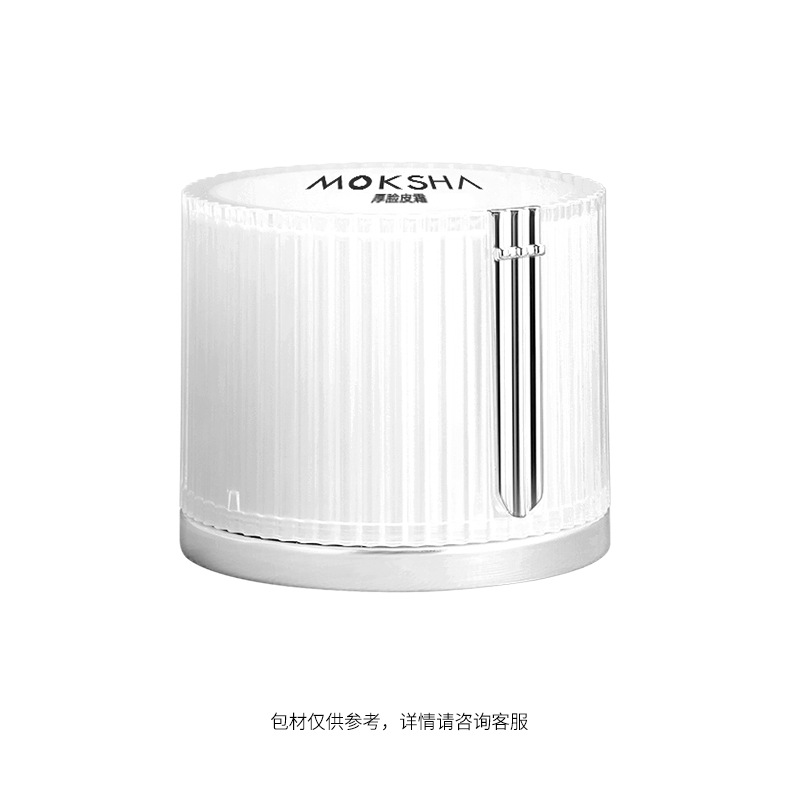
A jar product used with wet fingers is a different risk category from an airless pump. Wide-mouth packs, refillable formats and products used in the shower all raise exposure. Formulas that pass a challenge test in a tube can fail after a packaging change.
Water activity is the variable most often ignored. Glycerin and other polyols reduce available water, but only at concentrations that also change texture. If the texture target and the water activity target conflict, the claim is the item to renegotiate.
4. Testing beyond the challenge test
ISO 11930 challenge testing remains the baseline, but it should be run in the final pack, at the final fill weight, with a realistic in-use protocol. Add a stability study that tracks pH, viscosity and microbial counts over the shelf life, and a transport simulation for packs that may deform.
For high-risk formats, a small in-use study with volunteers can reveal contamination patterns that a laboratory test misses. Challenge data proves the formula; in-use data proves the product.
5. Honest claims and label wording
If the system relies on high polyol levels, say so in the usage instructions: avoid water ingress, close the cap, store away from heat. Avoid implying the product is sterile or that it needs no care.
Our barrier cream formats are produced in the workshop with environmental monitoring and batch-level micro testing, so the preservative strategy can be matched to the pack rather than assumed.
Contract manufacturing adds a constraint that laboratory work hides: changeover. A self-preserving formula that depends on a narrow pH window needs validated cleaning between batches, because residue from a previous alkaline product can shift the pH of the next batch enough to remove the protection.
Water quality is the second hidden variable. Even a well-maintained system varies in conductivity and microbial load, and a formula with no preservative has no buffer against a marginal water batch. Write the water specification into the quality agreement, not only into the formula file.
Retail partners increasingly ask for the preservative strategy in writing. A one-page summary of the system, the test results and the use conditions answers most of those questions and prevents a claim being rejected at listing stage.
Preservative-free is achievable for many formats, but it is a system-level decision involving formula, process, pack and consumer behaviour. Brands that brief all four together get a claim that survives the first hot summer. Review the product range, check the company profile, or contact us to discuss which formats can carry the claim in your market.
Frequently asked questions
Can you produce Preservative-Free and Self-Preserving Formulas under our own brand?
Preservative-Free and Self-Preserving Formulas is handled as a private label project: you bring the brand and the market position, we cover formula, bulk, filling and packing. Existing bases can be adjusted for texture, fragrance and active level, or we develop from a new brief. Tooling and artwork belong to you, and our name does not appear on the pack.
What is the minimum order quantity?
MOQ is set by net fill per unit, not by category:
| Net fill | MOQ |
|---|---|
| < 15 ml/g | 5,000 pcs |
| 15-50 ml/g (50 included) | 3,000 pcs |
| 50-200 ml/g (200 included) | 2,000 pcs |
| > 200 ml/g | 1,000 pcs |
Several SKUs in one project can share a production run to reach the threshold, and a smaller trial order is possible once the formula is approved.
How long do samples and bulk production take?
Samples take 7-10 working days from a confirmed brief, or 10-15 days when a new mould or artwork is involved. Bulk runs 25-35 days after sample approval and packaging arrival. Repeat orders with an unchanged formula usually move faster.
Which certificates and documents come with the shipment?
The plant runs under GMPC and ISO 22716 with a 100,000-class cleanroom. Each shipment can include COA, MSDS, the full INCI list, stability data and microbiological reports. For the EU we support CPSR and PIF paperwork; for other markets we prepare the file set your importer asks for.
Can we change the formula, fragrance or packaging?
Yes. Texture, viscosity, fragrance, colour and active percentage are adjustable within regulatory limits. Packaging can be sourced by you or by us: tubes, airless bottles, jars, sachets and aluminium foil bags, with silkscreen, hot stamping or label application.
What information do you need to quote?
Category and target function, quantity per SKU, packaging direction, destination market and launch date. With that we reply within 24 hours on business days with feasibility, MOQ and a price range. An NDA can be signed before formulas are discussed.
Need this produced? Talk to the factory.
Wangsha Bio has run OEM/ODM production since 2006: 60,000 sqm plant, 17 lines, 100,000-class cleanroom, GMPC and ISO 22716 certified. Send your brief and we reply within 24 hours on business days with feasibility, MOQ and a price range.
Email lucky@moksha-bio.com | Product range | Workshop