
 Qingyuan moksha Biotechnology Co., Ltd


A cleansing balm is one of the few cosmetic formats where a solid block melts on contact with skin and then turns into a milky emulsion under running water. That double behaviour is what makes it attractive to consumers and demanding for a factory. The performance of a balm is decided by its wax-to-oil ratio and its emulsifier system, not by the actives added at the end. This article walks through the structure, the melt point targets that keep a balm shippable, and the checks that catch problems before a bulk run.
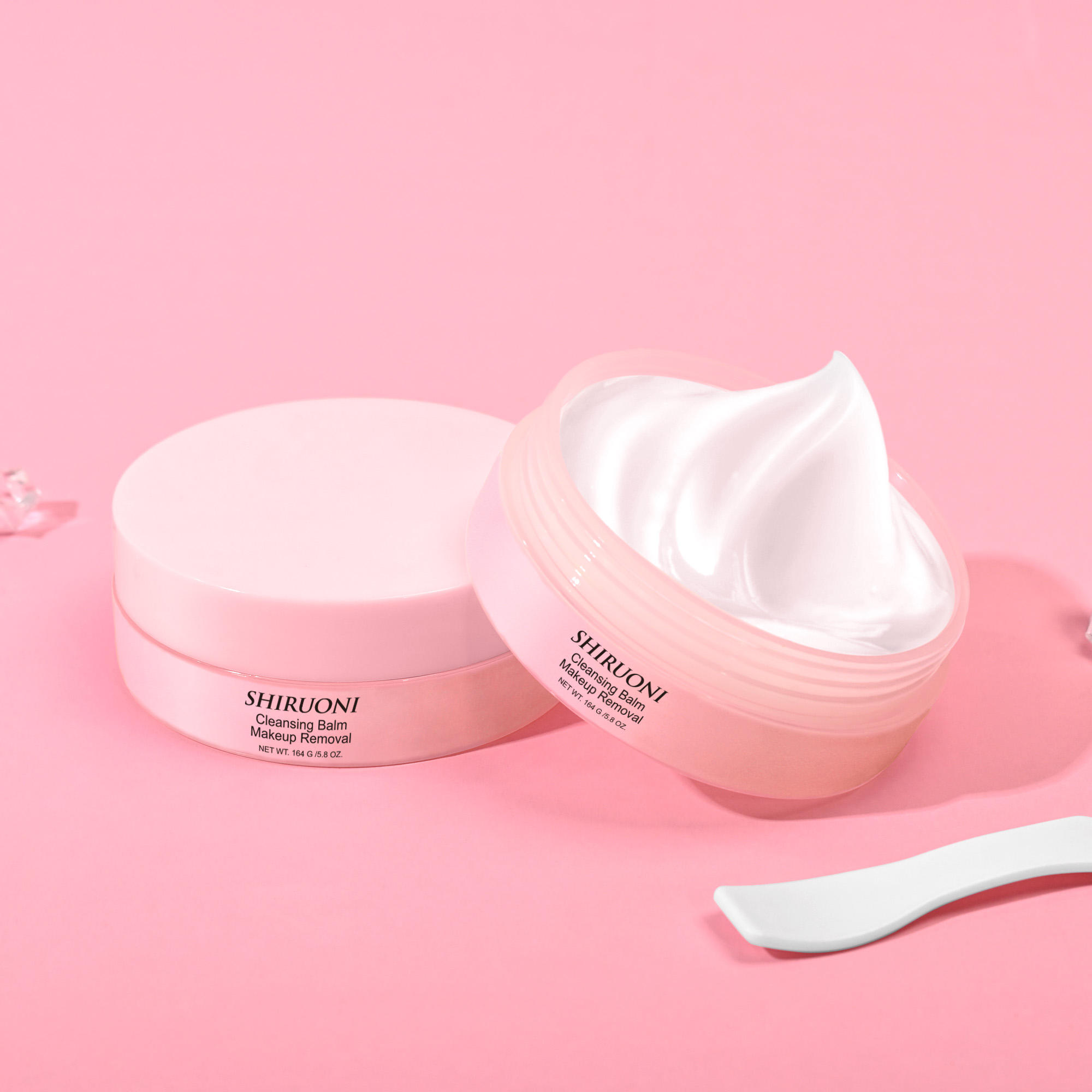
1. Why a balm behaves differently from a cream
A cream carries water and relies on an emulsifier film to keep oil droplets suspended. A balm carries almost no water, so its structure comes from crystallised waxes and butters forming a continuous network that traps the oils. With no water phase, the balm has no water activity to manage, but it has a crystal structure that must be reproduced batch after batch.
That crystal structure is sensitive to cooling rate. Fast cooling in a thin layer produces small crystals and a smooth, dense balm; slow cooling in a large drum produces larger crystals and a grainy surface. Cooling rate is a process parameter that has to be fixed and recorded, because the same formula can feel completely different depending on how it is cooled.
2. Wax and butter ratios as the structural backbone
A typical balm sits between 12% and 25% total structurant, counting waxes, butters and solid esters together. Below 12% the block is soft and collapses in warm weather; above 25% it drags on the skin and leaves a waxy film. Holding total structurant between 12% and 25% gives a block that holds its shape but still spreads easily.
The mix matters as much as the total. A single hard wax such as candelilla gives a firm but brittle block. Blending a hard wax with a soft butter and a solid ester produces a network with both strength and flexibility. Two or three structurants blended together almost always outperform a single wax at the same total loading, because each contributes a different crystal habit.
3. Melt point and shipping stability
Melt point is usually set with a target drop point between 45C and 55C. A balm that melts at 38C will slump in a delivery van in summer; one that melts at 65C feels hard and does not pick up on the fingers. Setting the drop point between 45C and 55C covers normal ambient shipping while keeping the balm soft enough to scoop.
Melt point alone does not guarantee stability. A balm can hold its shape at 45C and still sweat oil at 40C if the oil phase is not fully bound. Oil syneresis at elevated temperature is the failure mode that a drop point test will not catch, so a 40C storage trial is essential. Run it for at least four weeks in the final jar, because the package geometry affects heat transfer.
4. Emulsifier selection and rinse behaviour
The rinse step depends on a low-HLB emulsifier that forms a lamellar gel as water is added. Common choices are polyglyceryl esters and sucrose esters, used at 3% to 8%. Too little emulsifier leaves a greasy film after rinsing, while too much produces a tight, squeaky feel that consumers read as stripping.
Rinse feel is also driven by the oil phase. Light esters rinse cleanly; heavy mineral oil and petrolatum leave residue. If the brief asks for a clean rinse, the oil phase has to be built from esters and light vegetable oils rather than heavy hydrocarbons. A simple bench test is to emulsify a gram of balm in 20 ml of warm water in a jar and watch how quickly the milk breaks and whether a film forms on the glass.
5. Filling, packaging and claim boundaries
Balms are filled warm, usually between 55C and 65C, into jars that have been pre-warmed to avoid premature setting at the wall. Cold jars cause the balm to set on contact and leave a visible ring or cavity that will be rejected at inspection. Fill weight is checked after the balm has fully cooled, because the density changes as the crystal network forms.
Packaging choice drives the consumer experience more than most formats. A wide-mouth jar of 80 to 100 ml suits a scoop or finger application; a tube suits a stick format. Wide-mouth jars must be paired with a liner that tolerates oil contact, otherwise the gasket swells and the lid loosens in transit.
On claims, keep the language functional. A balm removes makeup and sunscreen; it does not treat, heal or repair a skin condition. Describing a balm as a makeup remover and cleanser keeps the claim inside what the product actually does. Brands can review the existing formats under our product range and check line capability on the workshop page. Background on the company is on the about us page, and a specific makeup remover balm shows a reference texture. Project enquiries go through contact.
Frequently asked questions
Can you produce Cleansing Balms and Butter Cleansers under our own brand?
Cleansing Balms and Butter Cleansers is handled as a private label project: you bring the brand and the market position, we cover formula, bulk, filling and packing. Existing bases can be adjusted for texture, fragrance and active level, or we develop from a new brief. Tooling and artwork belong to you, and our name does not appear on the pack.
What is the minimum order quantity?
MOQ is set by net fill per unit, not by category:
| Net fill | MOQ |
|---|---|
| < 15 ml/g | 5,000 pcs |
| 15-50 ml/g (50 included) | 3,000 pcs |
| 50-200 ml/g (200 included) | 2,000 pcs |
| > 200 ml/g | 1,000 pcs |
Several SKUs in one project can share a production run to reach the threshold, and a smaller trial order is possible once the formula is approved.
How long do samples and bulk production take?
Samples take 7-10 working days from a confirmed brief, or 10-15 days when a new mould or artwork is involved. Bulk runs 25-35 days after sample approval and packaging arrival. Repeat orders with an unchanged formula usually move faster.
Which certificates and documents come with the shipment?
The plant runs under GMPC and ISO 22716 with a 100,000-class cleanroom. Each shipment can include COA, MSDS, the full INCI list, stability data and microbiological reports. For the EU we support CPSR and PIF paperwork; for other markets we prepare the file set your importer asks for.
Can we change the formula, fragrance or packaging?
Yes. Texture, viscosity, fragrance, colour and active percentage are adjustable within regulatory limits. Packaging can be sourced by you or by us: tubes, airless bottles, jars, sachets and aluminium foil bags, with silkscreen, hot stamping or label application.
What information do you need to quote?
Category and target function, quantity per SKU, packaging direction, destination market and launch date. With that we reply within 24 hours on business days with feasibility, MOQ and a price range. An NDA can be signed before formulas are discussed.
Need this produced? Talk to the factory.
Wangsha Bio has run OEM/ODM production since 2006: 60,000 sqm plant, 17 lines, 100,000-class cleanroom, GMPC and ISO 22716 certified. Send your brief and we reply within 24 hours on business days with feasibility, MOQ and a price range.
Email lucky@moksha-bio.com | Product range | Workshop