Qingyuan moksha Biotechnology Co., Ltd


Sheet masks are no longer a single category. Fibre sheets, hydrogel sheets and bio-cellulose sheets sit on the same shelf at very different price points, and each one carries its own manufacturing constraints. Once the substrate changes, the essence, the fill process and the shelf life all have to be re-engineered. This guide compares the three substrate families for brand owners planning a premium sheet mask line.
Fibre, Hydrogel and Bio-Cellulose Compared
A fibre sheet is a nonwoven or woven fabric that carries liquid within its structure. A hydrogel sheet is a water-based polymer gel cast into a film, so the sheet is the essence rather than a carrier for it. Bio-cellulose is grown by fermentation into a nanofibre network that conforms closely to the skin. The differences in cost, occlusion and feel are large enough that the substrate decision comes before the essence brief.
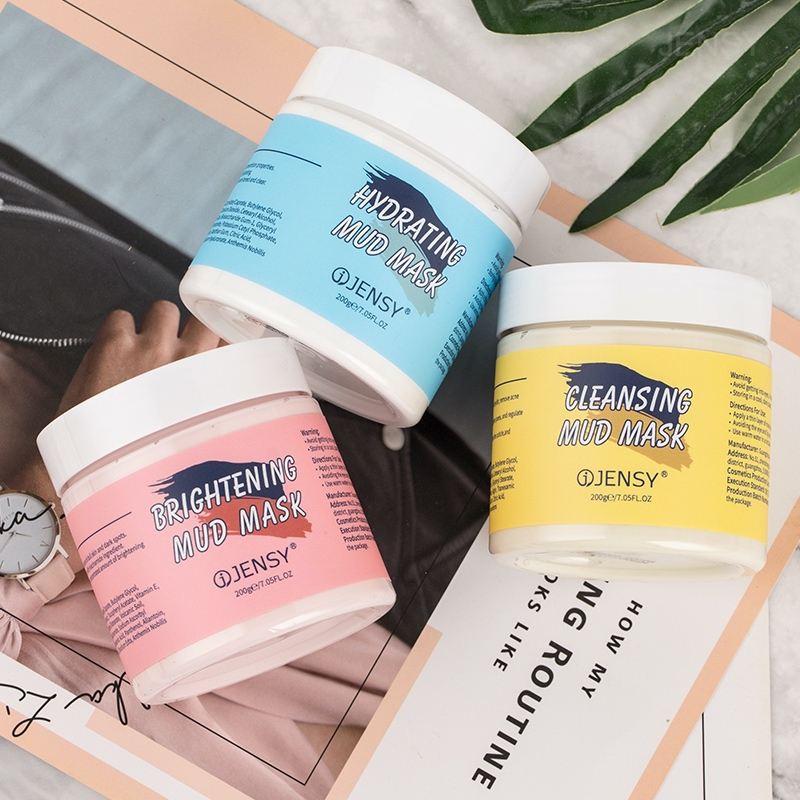
Fibre is the cheapest and the most flexible, and the range of available materials keeps expanding. Hydrogel gives a strong cooling sensation and a clean appearance, and it can be cast with a gradient of actives across the film. Bio-cellulose gives the closest conformity and the highest cost, and its production capacity is the limiting factor. Choose the substrate against the price point and the channel, because a bio-cellulose mask priced as a fibre mask cannot be manufactured profitably. Reference masks are listed in the product range, and a fibre format is shown in this organic mask reference.
Essence Load and Viscosity
The essence has to stay in the sheet until the user opens the pouch. Viscosity and surface tension control how well the liquid is retained, and both interact with the substrate's own structure. Load capacity measured on a fibre sheet tells you nothing about the same essence on a hydrogel film.
Over-loading is a common error. Excess essence drains to the bottom of the pouch, and the customer perceives a partially dry mask plus a wasted amount of liquid. Target a load that keeps the sheet uniformly saturated at the end of shelf life, not one that looks generous on day one.
Pouch format and seal integrity
Multi-layer laminates dominate this category because they protect against moisture loss and light. Seal strength and seal width have to be validated on the finished pouch, and the headspace geometry affects how the mask sits during transport. A pouch that survives handling but fails on a pallet is a distribution problem that appears only after the launch.
Microbiological Control in a Water-Rich Format
A sheet mask is essentially a wet wipe with a defined dose, so its microbiological risk is among the highest in skincare. There is no oil phase to create an unfavourable environment, and the pouch is opened completely before use. Preservation, water activity and the pouch seal carry the whole protection burden, and none of them can be regarded as a line item.
Water activity can be lowered through humectant content, though that changes the feel of the essence. The alternative is a stronger preservation system, which conflicts with the tolerance expectations of most sheet mask users. Decide deliberately which side of that trade-off the product sits on, and test accordingly. Cleanroom and filling conditions are described in the workshop overview.
Process Constraints by Substrate
Hydrogel casting requires tight control of the gelation window, because the film must set before the active gradient migrates. Bio-cellulose arrives as a wet sheet and has to be purified, cut and impregnated without damaging the nanofibre structure. Fibre sheets are the most forgiving and the most automation-friendly. Each substrate change effectively creates a new line, which is why a range that mixes all three costs more to run than it appears.
Cutting and folding accuracy affects the user experience more than most brand owners expect, particularly around the eye and mouth openings. Cut patterns should be validated on real faces rather than on a die drawing.
Claims and Documentation
Sheet mask copy tends toward strong language, which is also where the compliance risk sits. Descriptions should stay with appearance and the experience of use. Any wording that implies a change to the skin's physiology belongs in a different regulatory category and should be removed during drafting.
Three items belong in the specification: the challenge test method run on the finished mask in its final pouch, the net essence load with a tolerance, and the seal strength acceptance criteria. Net load tolerance is easy to hold in a fibre sheet and considerably harder in a hydrogel film, which is why it belongs in the agreement rather than in conversation. Specifications can be submitted through the inquiry form, and sampling can be scoped through the contact page.
Substrate choice drives everything else in this category. Pick the substrate for the price point, engineer the load and the seal around it, and verify the finished pouch on the shelf: that is what makes a premium mask line repeatable.
Frequently asked questions
Can you produce Hydrogel and Bio-Cellulose Sheet Masks under our own brand?
Hydrogel and Bio-Cellulose Sheet Masks is handled as a private label project: you bring the brand and the market position, we cover formula, bulk, filling and packing. Existing bases can be adjusted for texture, fragrance and active level, or we develop from a new brief. Tooling and artwork belong to you, and our name does not appear on the pack.
What is the minimum order quantity?
MOQ is set by net fill per unit, not by category:
| Net fill | MOQ |
|---|---|
| < 15 ml/g | 5,000 pcs |
| 15-50 ml/g (50 included) | 3,000 pcs |
| 50-200 ml/g (200 included) | 2,000 pcs |
| > 200 ml/g | 1,000 pcs |
Several SKUs in one project can share a production run to reach the threshold, and a smaller trial order is possible once the formula is approved.
How long do samples and bulk production take?
Samples take 7-10 working days from a confirmed brief, or 10-15 days when a new mould or artwork is involved. Bulk runs 25-35 days after sample approval and packaging arrival. Repeat orders with an unchanged formula usually move faster.
Which certificates and documents come with the shipment?
The plant runs under GMPC and ISO 22716 with a 100,000-class cleanroom. Each shipment can include COA, MSDS, the full INCI list, stability data and microbiological reports. For the EU we support CPSR and PIF paperwork; for other markets we prepare the file set your importer asks for.
Can we change the formula, fragrance or packaging?
Yes. Texture, viscosity, fragrance, colour and active percentage are adjustable within regulatory limits. Packaging can be sourced by you or by us: tubes, airless bottles, jars, sachets and aluminium foil bags, with silkscreen, hot stamping or label application.
What information do you need to quote?
Category and target function, quantity per SKU, packaging direction, destination market and launch date. With that we reply within 24 hours on business days with feasibility, MOQ and a price range. An NDA can be signed before formulas are discussed.
Need this produced? Talk to the factory.
Wangsha Bio has run OEM/ODM production since 2006: 60,000 sqm plant, 17 lines, 100,000-class cleanroom, GMPC and ISO 22716 certified. Send your brief and we reply within 24 hours on business days with feasibility, MOQ and a price range.
Email lucky@moksha-bio.com | Product range | Workshop