Qingyuan moksha Biotechnology Co., Ltd


Spray formats look like packaging rather than formulation, and that assumption is what causes late-stage problems. A spray is defined by its delivery: droplet size, spray pattern and the rate at which the pump or propellant expels the product decide how the user experiences it. In a spray product the package is part of the formula, and changing the actuator can change the outcome more than changing an ingredient. This guide covers the pump and aerosol routes for brand owners considering a spray line.
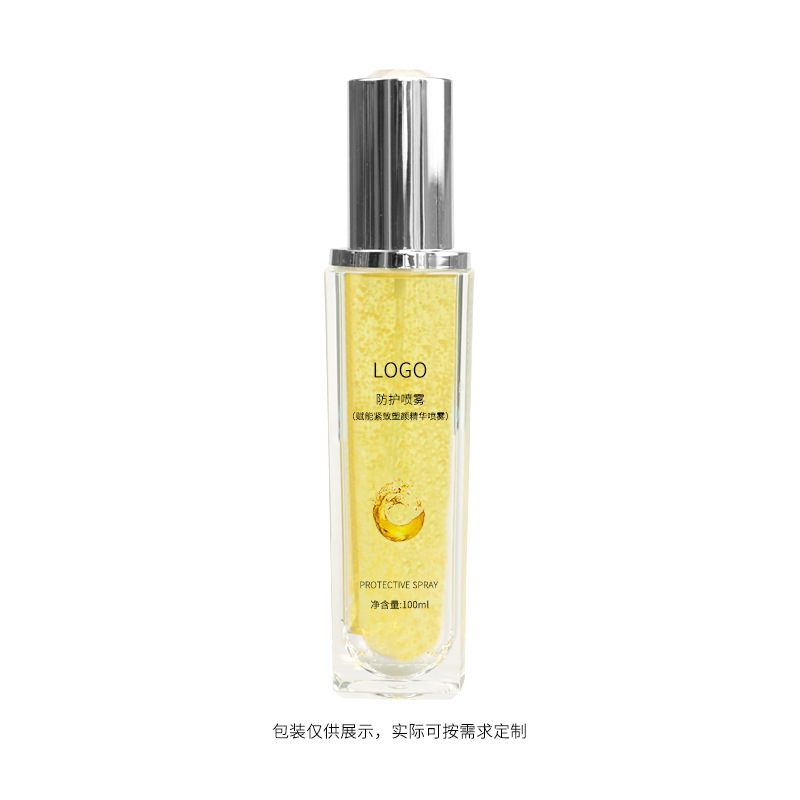
Pump Spray, Aerosol and Bag-on-Valve
Pump sprays draw the liquid through a mechanical actuator with no propellant. Aerosols use a liquefied or compressed propellant to pressurise the can. Bag-on-valve separates the product from the propellant in a sealed bag inside the can, so the product is dispensed without propellant contact. The three routes differ in cost, shipping classification and formulation freedom, and the differences are large enough to decide the project.
Pumps are the simplest and the easiest to fill with conventional equipment, but they lose performance as the bottle empties and they cannot produce a fine mist at high viscosity. Aerosols deliver a consistent spray through the life of the can and require dedicated filling capacity and safety documentation, since pressurised containers carry transport restrictions. Bag-on-valve removes the compatibility problem but raises unit cost. Shipping classification alone can eliminate the aerosol route for some markets, so confirm it before the concept is fixed. Formats in the current range are listed under the product range.
Formulating for Sprayability
Sprayability is a physical property of the liquid. Viscosity, surface tension and the volatility of the carrier all affect droplet size and how quickly the deposit dries on skin. A liquid that performs well as a roll-on or a lotion will rarely spray well without adjustment.
Low-viscosity systems can be reached through the choice of solvent or through thinning the aqueous phase, and each route brings consequences. Alcohol-based systems dry quickly and feel light, but they change preservation requirements and can be uncomfortable on a compromised barrier. Aqueous systems need a preservative that tolerates both the pack and the actuator's exposure to air. The solvent decision determines preservation, compatibility and the sensory outcome, so it should be made first rather than last. A liquid format used in a similar application is shown in this toner reference.
Actuator and insert selection
The actuator, not the bottle, sets the spray pattern. Two actuators on the same bottle can produce a coarse jet and a fine mist respectively, and the difference is visible to the customer within one use. Inserts and swirl chambers control the pattern, and they have to be matched to the viscosity range of the liquid. Verify the actuator against the finished liquid, because a datasheet cannot predict the pattern.
Containment, Propellant and Safety Documentation
Aerosol products require documentation covering the propellant, the can rating, the fill ratio and the transport classification. Some markets also impose specific labelling for pressurised containers. The paperwork for an aerosol product is a project milestone rather than a filing detail, and late documentation can delay a launch by weeks.
Bag-on-valve sidesteps part of the compatibility question because the product never contacts the propellant, which widens the range of usable formulas. The cost is a higher unit price and a supply base with fewer qualified fillers. Fewer qualified fillers is a capacity risk rather than a sourcing preference, and it should be reflected in the production plan. Filling and cleanroom conditions for these formats are described in the workshop overview.
Consumer Use and Claims
Spray products are used close to the face and often in the open air, so the applicator design affects both the experience and the amount of product that reaches the skin. A fine mist is more comfortable but deposits less per activation; a coarser pattern deposits more but risks running. Deposition per activation is a specification item, because it determines how long a bottle actually lasts in use.
Wording around sprays tends to drift into claims about inhalation, cooling or protection, which sit in a more regulated space. Descriptions should stay with appearance and user experience, and any statement about a functional effect needs documented support. Keep the claim set tied to what the product demonstrably does on skin. Specifications can be submitted through the inquiry form, and sampling can be planned through the contact page.
A spray line succeeds or fails on the delivery experience, which is engineered jointly by the formulation and the pack. Fix the solvent and the viscosity first, then choose the delivery system against them, and validate the whole assembly in the pack the customer will hold.
Frequently asked questions
Can you produce Spray and Aerosol Formats in Private Label Personal Care under our own brand?
Spray and Aerosol Formats in Private Label Personal Care is handled as a private label project: you bring the brand and the market position, we cover formula, bulk, filling and packing. Existing bases can be adjusted for texture, fragrance and active level, or we develop from a new brief. Tooling and artwork belong to you, and our name does not appear on the pack.
What is the minimum order quantity?
MOQ is set by net fill per unit, not by category:
| Net fill | MOQ |
|---|---|
| < 15 ml/g | 5,000 pcs |
| 15-50 ml/g (50 included) | 3,000 pcs |
| 50-200 ml/g (200 included) | 2,000 pcs |
| > 200 ml/g | 1,000 pcs |
Several SKUs in one project can share a production run to reach the threshold, and a smaller trial order is possible once the formula is approved.
How long do samples and bulk production take?
Samples take 7-10 working days from a confirmed brief, or 10-15 days when a new mould or artwork is involved. Bulk runs 25-35 days after sample approval and packaging arrival. Repeat orders with an unchanged formula usually move faster.
Which certificates and documents come with the shipment?
The plant runs under GMPC and ISO 22716 with a 100,000-class cleanroom. Each shipment can include COA, MSDS, the full INCI list, stability data and microbiological reports. For the EU we support CPSR and PIF paperwork; for other markets we prepare the file set your importer asks for.
Can we change the formula, fragrance or packaging?
Yes. Texture, viscosity, fragrance, colour and active percentage are adjustable within regulatory limits. Packaging can be sourced by you or by us: tubes, airless bottles, jars, sachets and aluminium foil bags, with silkscreen, hot stamping or label application.
What information do you need to quote?
Category and target function, quantity per SKU, packaging direction, destination market and launch date. With that we reply within 24 hours on business days with feasibility, MOQ and a price range. An NDA can be signed before formulas are discussed.
Need this produced? Talk to the factory.
Wangsha Bio has run OEM/ODM production since 2006: 60,000 sqm plant, 17 lines, 100,000-class cleanroom, GMPC and ISO 22716 certified. Send your brief and we reply within 24 hours on business days with feasibility, MOQ and a price range.
Email lucky@moksha-bio.com | Product range | Workshop